A new Lagos market survey published on 1 November reports a mixed October for household food bills. Nairametrics counted price increases for 31 of 67 tracked food items, reductions for 20 and no change for 16. Its researchers covered Mushin, Daleko, Mile 12 and Oyingbo markets. These are observations from that survey, not prices independently collected by Wahala Today.
Both yellow and white maize rose from ₦40,000 to ₦55,000 for a 50 kg bag between September and October, an increase of 37.5%. Yellow garri moved from ₦18,000 to ₦23,000 per 50 kg bag, or about 27.8%. Those figures describe the specified bulk quantities; they do not establish what every trader charged for a smaller household measure.
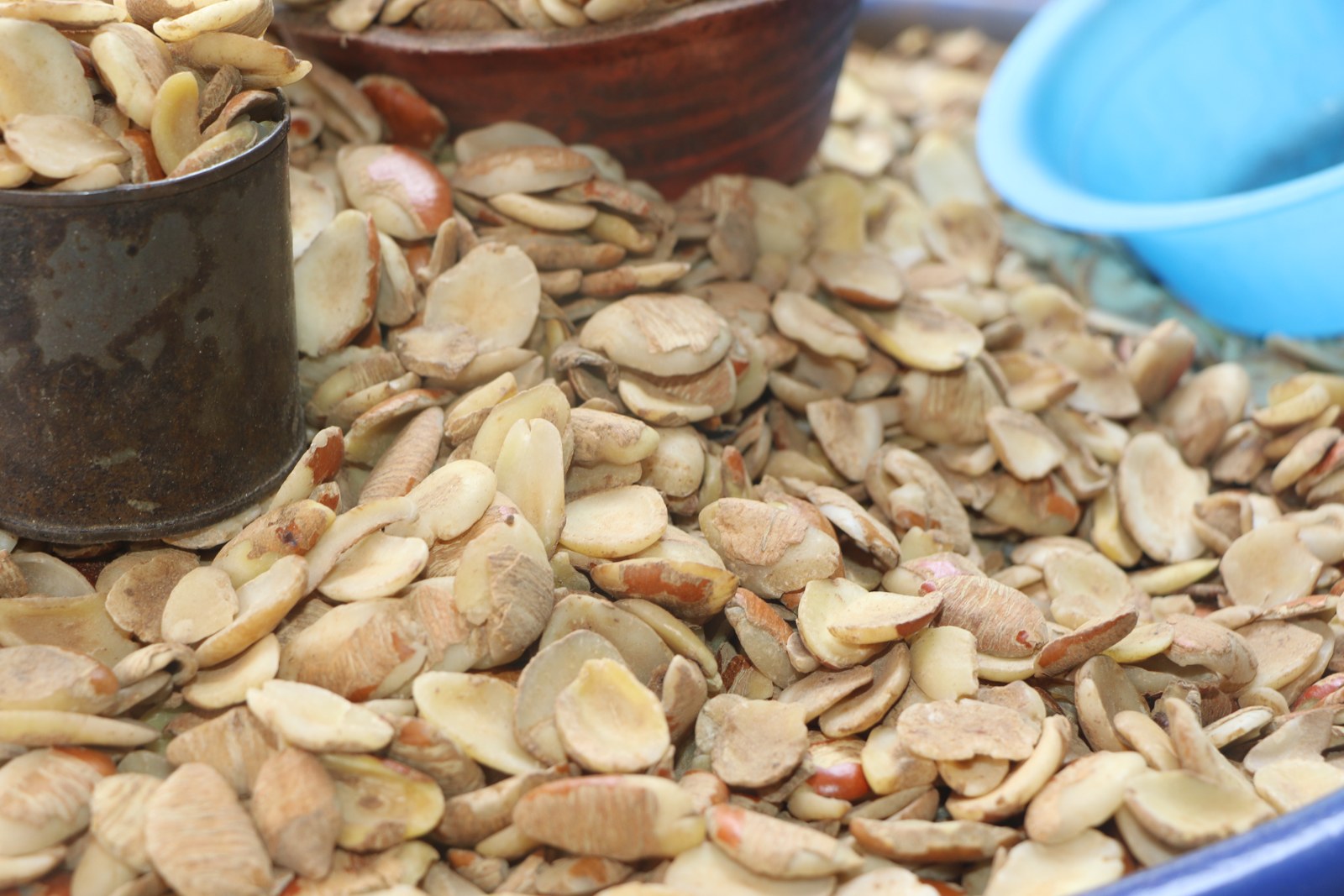
Ogbono, the bush-mango seed used in soup, increased from ₦300,000 to ₦405,000 for what the report calls a big bag. That is a 35% rise. The published account does not specify that bag’s weight, so it would be misleading to convert its price into a kilogram rate or directly compare it with the maize bag.
Other foods moved in the opposite direction. A big basket of round tomatoes fell from ₦45,000 to ₦35,000, about 22.2%. Titus mackerel declined from ₦10,500 to ₦9,000 per kilogram. A 50 kg bag of Royal Stallion short-grain rice slipped from ₦49,000 to ₦48,000. A household’s experience therefore depends on the products and quantities it actually buys.
The practical lesson is to compare like with like: product variety, weight or container size, and the period covered. A lower basket price is not automatically a lower price per kilogram if basket sizes differ. Likewise, a monthly change in several Lagos markets does not establish the same change in other states or at every neighbourhood shop.
The results offer a local shopping snapshot, rather than a national inflation estimate. Counting how many items became dearer does not measure their combined contribution to a household budget: frequently purchased staples and occasional purchases carry different importance. The report also does not establish today’s price at an individual stall. Readers can use the stated units and dates to understand the findings without treating them as guaranteed retail quotations.