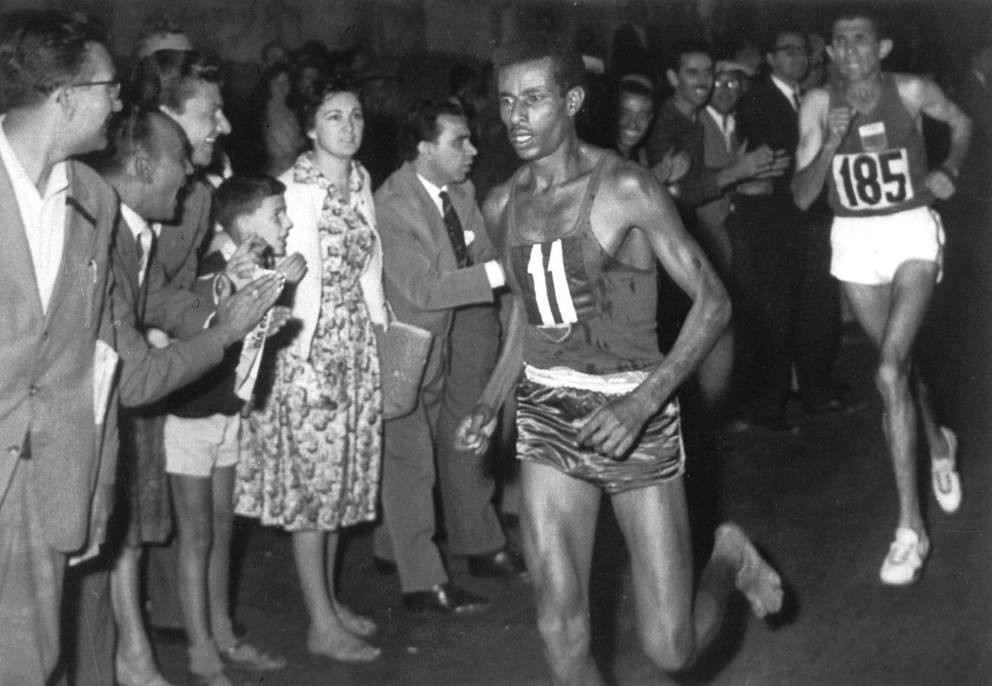
Abebe Bikila won the Olympic marathon in Rome on 10 September 1960 while running barefoot. World Athletics identifies him as the first black African to win Olympic marathon gold. The photograph remains memorable, but the result deserves to be understood as a competitive achievement rather than an unusual-footwear anecdote.
Bikila arrived from Ethiopia after preparation with coach Onni Niskanen. The official historical account describes training both with and without shoes, and problems finding comfortable footwear before the race. His choice in Rome was part of that specific situation, not evidence that equipment never matters to distance runners.
The race became a contest between Bikila and Morocco's Rhadi Ben Abdesselam. They stayed together deep into the distance before Bikila made his decisive move with roughly 500 metres remaining. That late separation is central to understanding how the gold medal was won.
Bikila finished in 2:15:16.2, according to World Athletics' retrospective, with Ben Abdesselam taking silver about 25 seconds behind. New Zealand's Barry Magee won bronze. Naming the other medallists preserves the race as an international contest instead of allowing one iconic image to erase the field.
Four years later, Bikila successfully defended the Olympic marathon title in Tokyo, this time wearing shoes. The second victory broadens the story beyond barefoot running. His excellence was sustained across two Games and different circumstances, making the athlete's preparation and competitive ability essential parts of the account.
Rome 1960 remains a landmark for African distance running, but its historical meaning does not require a claim that one race alone created later generations of champions. It offers a powerful, concrete example of achievement. Remembering the athlete, opponents and race together gives that example its full weight.