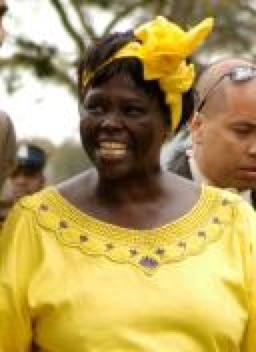
Wangari Maathai became the first African woman to receive the Nobel Peace Prize in 2004. The award recognised a contribution connecting sustainable development, democracy and peace. Looking back at that milestone reveals a career in which scientific training and public organising belonged to the same larger project.
Born in Nyeri, Kenya, in 1940, Maathai pursued university study in the United States before further doctoral work in Germany and Kenya. She received her doctorate from the University of Nairobi in 1971. Her Nobel biography records teaching in veterinary anatomy as part of her academic career.
In 1977 she started the Green Belt Movement, encouraging women to plant trees and respond to environmental degradation. Nobel's account connects the campaign with threats to agricultural livelihoods. A tree in this story was therefore more than a symbol: it belonged to questions about land, resources and daily life.
The movement's approach also linked local action with women's participation and democratic rights. The 2004 prize did not isolate conservation from those wider concerns. Its significance lies partly in recognising that environmental work can involve who has a voice in decisions affecting communities.
For readers assessing environmental projects today, that history suggests useful questions rather than a ready-made formula. Who takes part in decisions? Who maintains the trees after planting? How does a project serve the people living with it? A photograph of planting alone cannot answer those questions.
Maathai's achievement should be described with its historical date rather than presented as a new award. Its continuing relevance comes from the relationship it illuminated between knowledge, organisation and public participation. The 2004 milestone gives African excellence a form measured through sustained collective work as well as individual recognition.