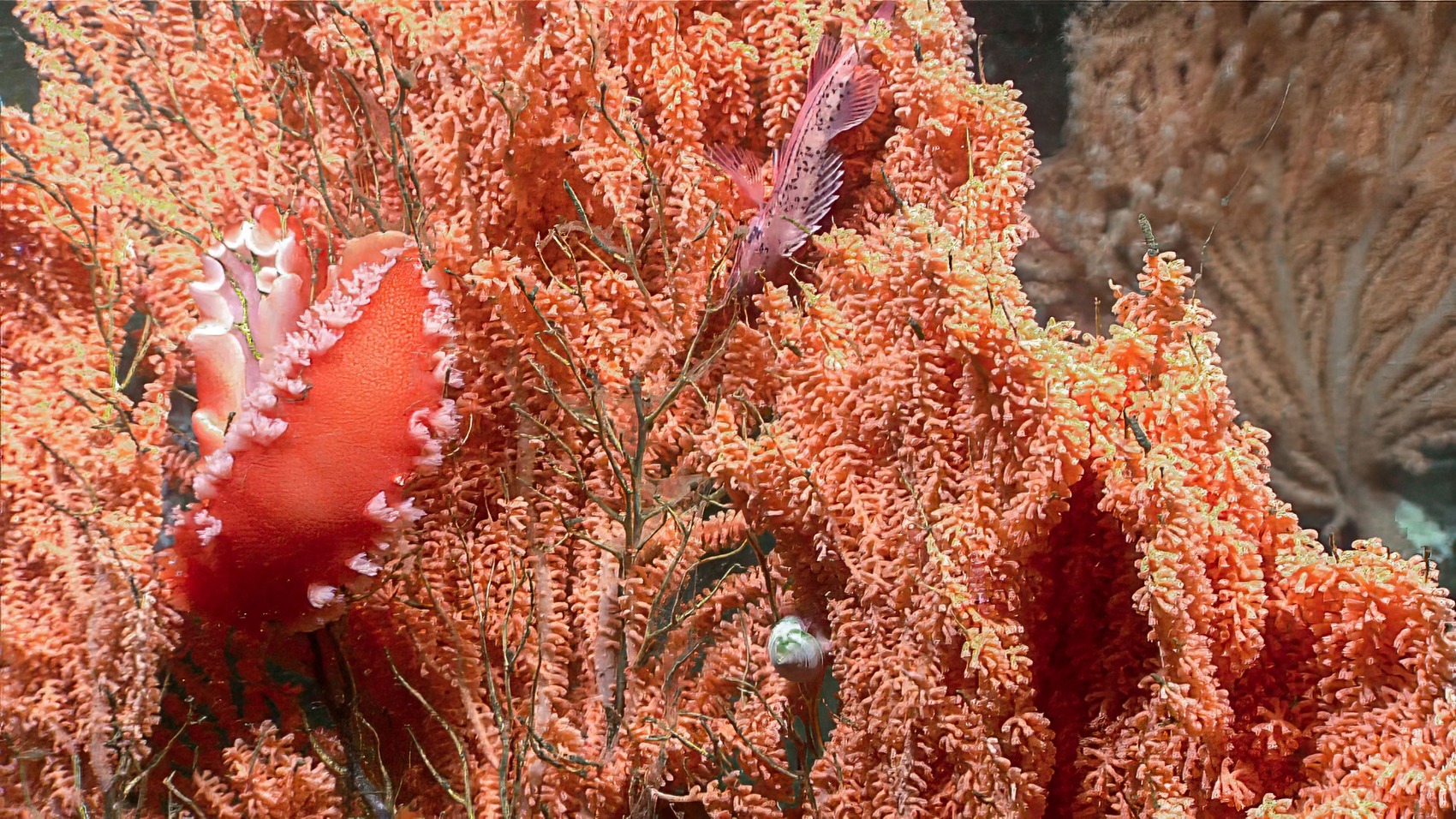
Deep waters around Alaska contain varied coral and sponge communities that are still poorly documented. A NOAA account published June 18 describes researchers' analysis of 75 hours of expedition video, providing a baseline for understanding habitats observed during the 2023 Seascape Alaska campaign.
The team recorded more than 164 distinct physical forms, or morphotypes. That term should not be silently replaced with newly discovered species: similar-looking organisms may require further examination before researchers establish their exact identities. Video records show diversity without settling every taxonomic question.
Many forms appeared at only one surveyed dive site. Researchers also identified eight sites meeting criteria for high-density vulnerable marine ecosystems. These findings concern the locations examined, rather than a complete census of all Alaska's deep ocean.
The distribution was associated especially strongly with currents and water masses, bodies of water sharing properties such as temperature and oxygen conditions. Sites within similar oceanographic settings could host comparable communities even when their depths differed. Depth alone was therefore an incomplete guide.
Corals and sponges also create structures used by other animals. Understanding where dense communities occur can support decisions about research and stewardship. The study supplies ecological evidence; it does not, by itself, announce a new protected area or management rule.
The broader insight is that the water passing over a habitat helps shape what lives there. Future surveys can test whether similar conditions predict similar communities elsewhere. Archived video remains useful because researchers can revisit observations and ask questions beyond the expedition's first description.