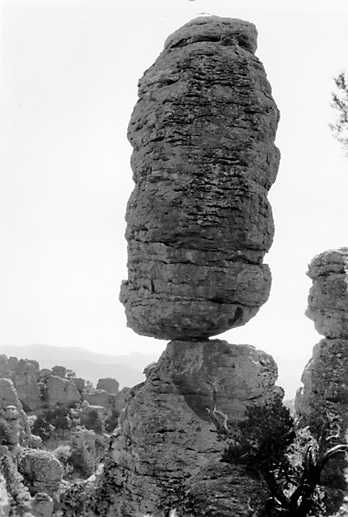
The dramatic stone towers of Arizona's Chiricahua landscape began with a destructive volcanic episode about 27 million years ago. NASA Earth Observatory's October 28 account uses a new Landsat view to explain that history. The rocks look like an arrangement of separate monuments from the ground, but their origins connect to a much larger volcanic system.
Explosive eruptions spread ash and pumice over the region. Hot flows of volcanic fragments then hardened into thick layers of welded rock called rhyolitic tuff. As the underground magma chamber emptied, the land above collapsed, leaving the Turkey Creek caldera. The present landscape developed from those volcanic materials over an immense span of time.
Weathering and erosion gradually cut the rock into spires, hoodoos and canyons. Some formations carry large balanced boulders, while others stand in dense clusters. The Apache description of the area as the land of standing-up rocks reflects this remarkable terrain; it is also a reminder that the landscape has a human history alongside its geology.
Landsat 9 photographed the area on July 2. From orbit, individual towers are too small to resolve in the published view. Instead, the image shows the broader grey volcanic ridges and winding green valleys. Matching that regional pattern with ground observations helps explain how water, vegetation and rock structure organise the landscape.
The area's biological variety is another part of its appeal. Several major ecological regions meet here, bringing desert plants and mountain forests into relatively close proximity. The Chiricahua Mountains form one of Arizona's isolated mountain ranges, often called sky islands because they rise above the surrounding desert lowlands.
NASA's October report also notes the area's redesignation as a national park. The geological interest, however, long predates that administrative change. A recent satellite image can document an old landscape without making the rocks a new discovery: its value lies in revealing how volcanic construction and slow erosion combined to produce today's extraordinary shapes.