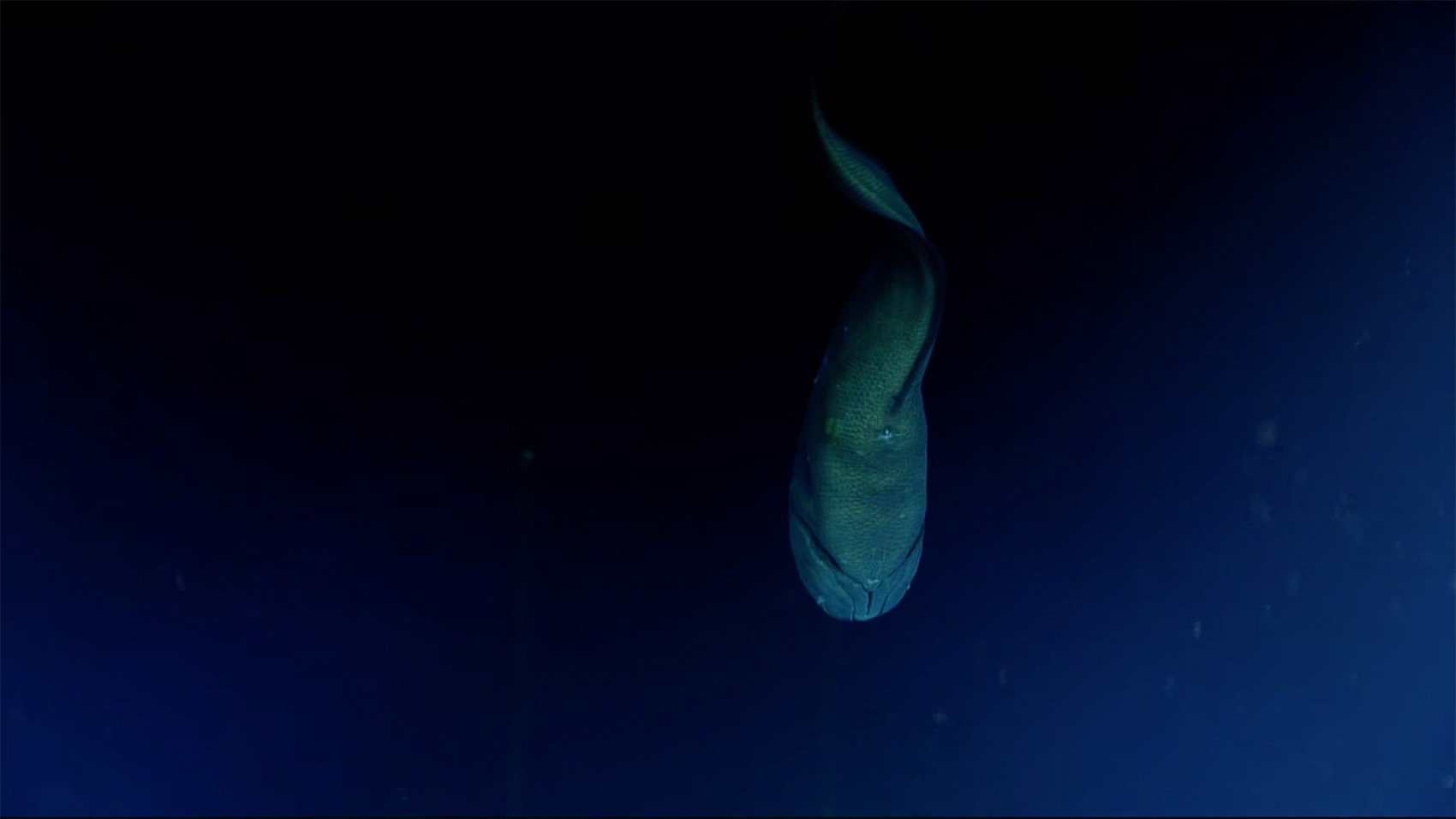
Watching fish where they live can reveal behaviour that a collected specimen cannot preserve. A NOAA report published March 19 describes research using footage from 30 dives near Puerto Rico to compare fish communities across a wide range of depths.
The researchers found declining abundance and diversity with increasing depth in the observations they analysed. Deeper, colder water also contained a greater proportion of swimming fish with elongated bodies. This is a pattern in a survey, not a claim that every deep-sea fish has the same shape.
Possible explanations include efficient movement over long distances and additional space for sensory structures along the body. Those ideas still require testing. The study supports the observed relationship between environment and body form without proving one universal reason for it.
Video also showed interactions with the seafloor, including fish that are often described as living in the water column. Other observations involved animals moving around human rubbish. Such context helps researchers understand a species as a living participant in its habitat, rather than just a name or specimen.
The footage came from remotely operated vehicles and a crewed submersible, bringing different observing platforms together. Reviewing these records also involved undergraduate researchers. Open expedition data therefore supported both scientific analysis and practical research experience.
The wider lesson is that physical collections and observations in place answer complementary questions. More surveys can test how consistent the patterns are elsewhere. The March findings add evidence about the deep ocean, while leaving room to investigate what actually drives the changes with depth.