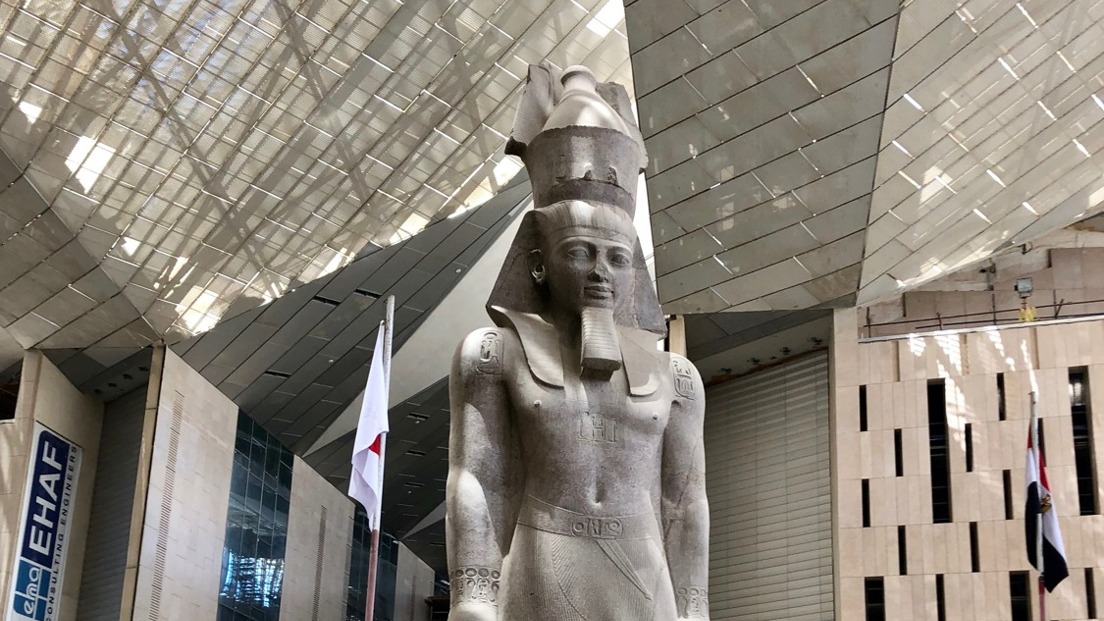
On the evening of 1 November, pictures appeared on the walls behind the statue of Ramses II at the Grand Egyptian Museum in Giza. The performance, called Eternal Sun, marked one year since the museum’s grand opening. It uses the building itself to tell a story. Visitors can stand in the hall that houses the statue and see the light and scenery around it change.
The museum describes the show as a 35-minute performance using music, projections and narration in two languages. That time is the length of the show. It is separate from the hours visitors might spend exploring the museum’s permanent galleries. The museum stands near the pyramids of Giza and holds objects from the tomb of Tutankhamun, discovered in 1922.
Ahmed Ghoneim, the museum’s chief executive, put attendance over the first year at around five million visitors. He said about six out of every ten came from outside Egypt.
Those figures cover the museum’s first year of visits. The organisers will need attendance figures for the evening programme itself to assess how many people the new show attracts.
For someone organising a visit, the ticket choices involve two different decisions. The ordinary museum visit includes the Tutankhamun galleries, main galleries and Grand Stairs. The evening event has its own booking page that asks the visitor to select a performance time. A gallery closing time alone will not tell a visitor when a particular performance begins.
What it means for you: if you are planning a trip from Nigeria, compare the date and time on the event page with the hours for the galleries before paying. The event page asks guests to arrive 30 minutes before their selected performance. Allow for that arrival time as well as the 35 minutes of the show when making plans to meet someone or arrange transport afterwards.