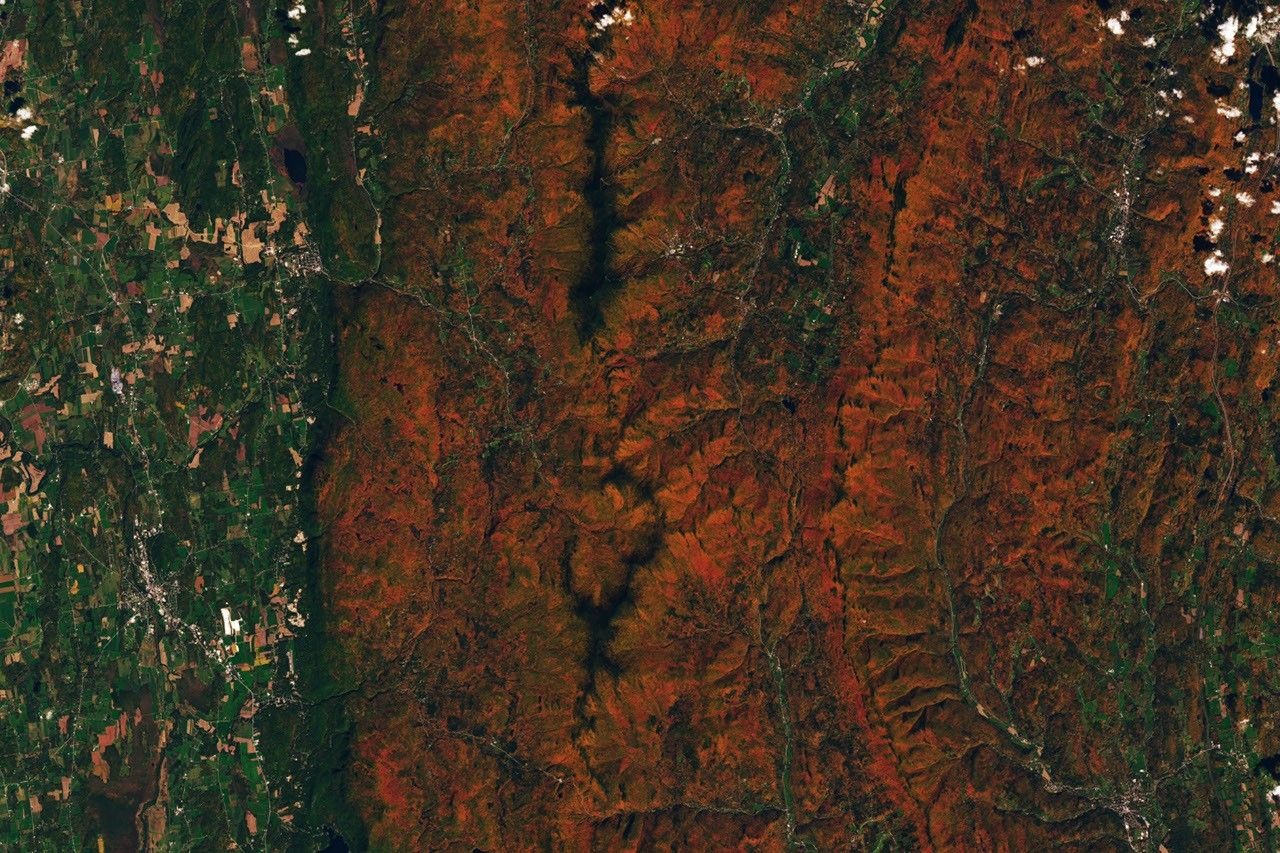
NASA's PACE satellite is giving researchers a new way to follow autumn colour across large areas. An October 26 Earth Observatory report explains how its Ocean Color Instrument can also detect changes in vegetation. The work uses particular wavelengths to investigate pigments rather than merely identifying attractive red scenery.
Leaves contain several pigments with different optical signatures. Chlorophyll produces the familiar green appearance, carotenoids contribute yellow and orange, and anthocyanins contribute red. As seasonal conditions change, their relative influence changes too, creating patterns that a suitably sensitive instrument can measure.
PACE observes many narrow wavelength bands and revisits broad areas frequently. Researchers can therefore compare observations through time to follow where redness is increasing or fading. The October examples show seasonal changes moving across northern regions, rather than every forest reaching its brightest colour on the same day.
Not every red patch means an autumn woodland. Crops can change as they age or after harvest, while stress from drought or insects can also affect pigments. Clouds can leave gaps. Reading a vegetation map therefore requires attention to land use, conditions and the limits of the observations.
NASA's team is seeking photographs from people on the ground to help check those interpretations. Observations of shrubs, grasses and other vegetation can be useful alongside pictures of colourful trees. The purpose is to connect the satellite signal with what is actually growing at a location.
Over time, repeated measurements could improve understanding of seasonal timing and vegetation responses. That is broader than planning a leaf-viewing trip. The current achievement is a way to track pigment changes repeatedly, with ground evidence helping scientists distinguish a seasonal display from other causes of colour.