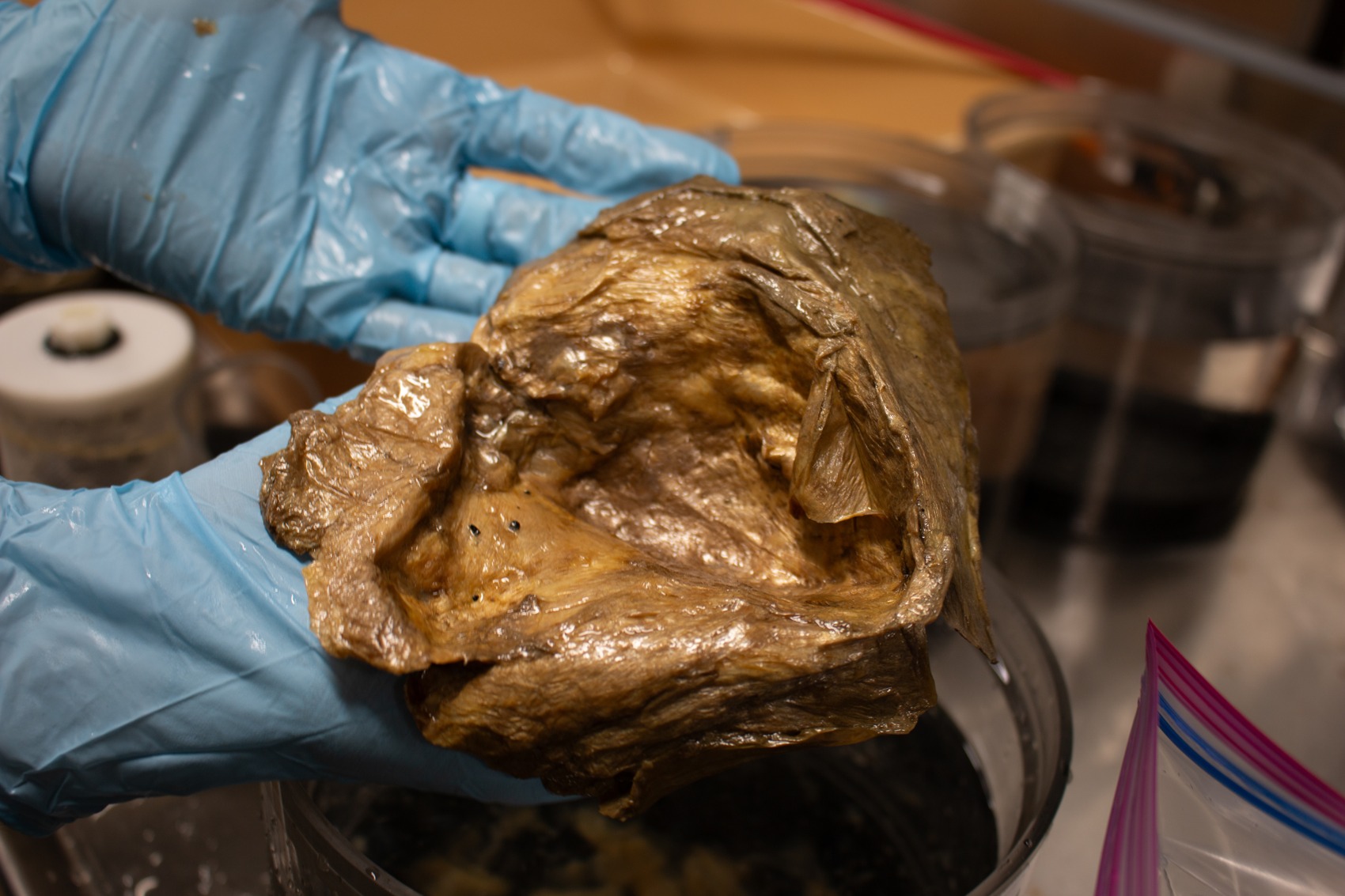
Golden object wey scientists find for Alaska deep seafloor in 2023 raise questions because dem no fit identify am immediately. NOAA April 22, 2026 explanation identify the specimen as material from base of giant anemone Relicanthus daphneae. This na look back at that confirmed identification, no be fresh discovery today.
The object attach to rock more than three kilometres below sea surface. Remotely operated vehicle collect am for examination. To bring sample back allow researchers investigate structure and genetics instead of depending only on the original underwater pictures wey first make the object look strange.
The layered, fibrous material contain special cells wey direct attention toward particular group of animals. Researchers compare physical evidence with genetic results. The first DNA barcoding no give clear answer. This show say early test no always settle identification, even when scientists get real specimen.
More extensive sequencing produce strong match with the anemone, including comparison of mitochondrial genetic material. Similar specimen from another expedition also help the investigation. Combined evidence explain unusual object wey no look like complete living animal when team first see am for seafloor.
The identification no establish exactly wetin happen to the rest of the anemone. E fit don die or move away. To separate that unanswered history from the material wey dem identify keep the finding accurate. Uncertainty no need turn into more dramatic story.
The episode show why collecting, preserving and re-examining samples matter for ocean research. Strange shape fit inspire useful questions, but explanation fit need different kinds of evidence. The result replace speculation with biological identity, while some details of the animal life still remain unresolved.