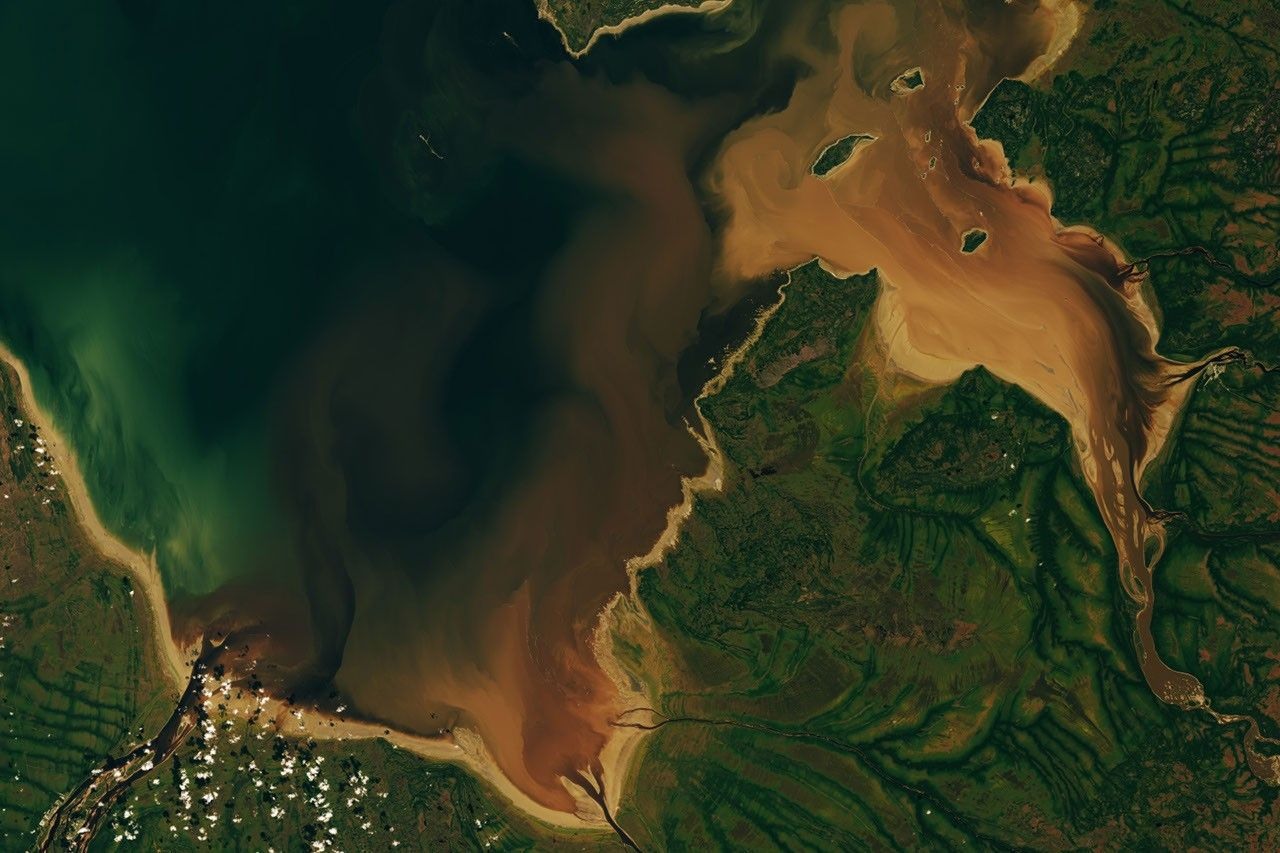
Brown swirls wey enter Canada Hannah and Rupert bays fit look like giant cup of tea from space. NASA Earth Observatory October 6 report explain say chemistry dey behind that comparison. Rivers wey pass forests and wetlands carry dissolved organic matter wey change water colour before e reach coast.
Leaves, bark, roots and soil release material as dem decay. Some of the compounds absorb blue and ultraviolet light, so water look brown. This coloured dissolved organic matter include substances related to tannins and lignins. The colour alone no prove say industrial spill don happen; person need evidence and local context.
Landsat 9 capture the scene September 27, with river water spreading across shallow mudflats and mixing with darker blue James Bay water. Suspended sediment na another source of brown. Tides and river currents stir fine particles from the bottom, making lighter plumes wey join the darker stained water.
The coast also dey change on much slower timescale. Land still dey rise after ancient ice sheets remove their heavy weight, a process called postglacial rebound. Rivers also dey deposit sediment. Broad shallow coastline and continuing deposits help maintain the mudflats. So colour na only one part of wider landscape process.
For land, branching green patterns show differences in plants and drainage. Places near streams with more trees look darker, while wet peatlands get less tree cover and look lighter. The picture connect river chemistry with forests, soil and wetlands wey the water pass through before e reach the bays.
NASA account also discuss the long Cree history of the area and how beavers matter for local culture and trade. The science lesson na say striking colour need explanation wey use real context. Different natural processes fit appear inside one picture, and knowing dissolved matter apart from suspended sediment help readers understand wetin satellite truly see.