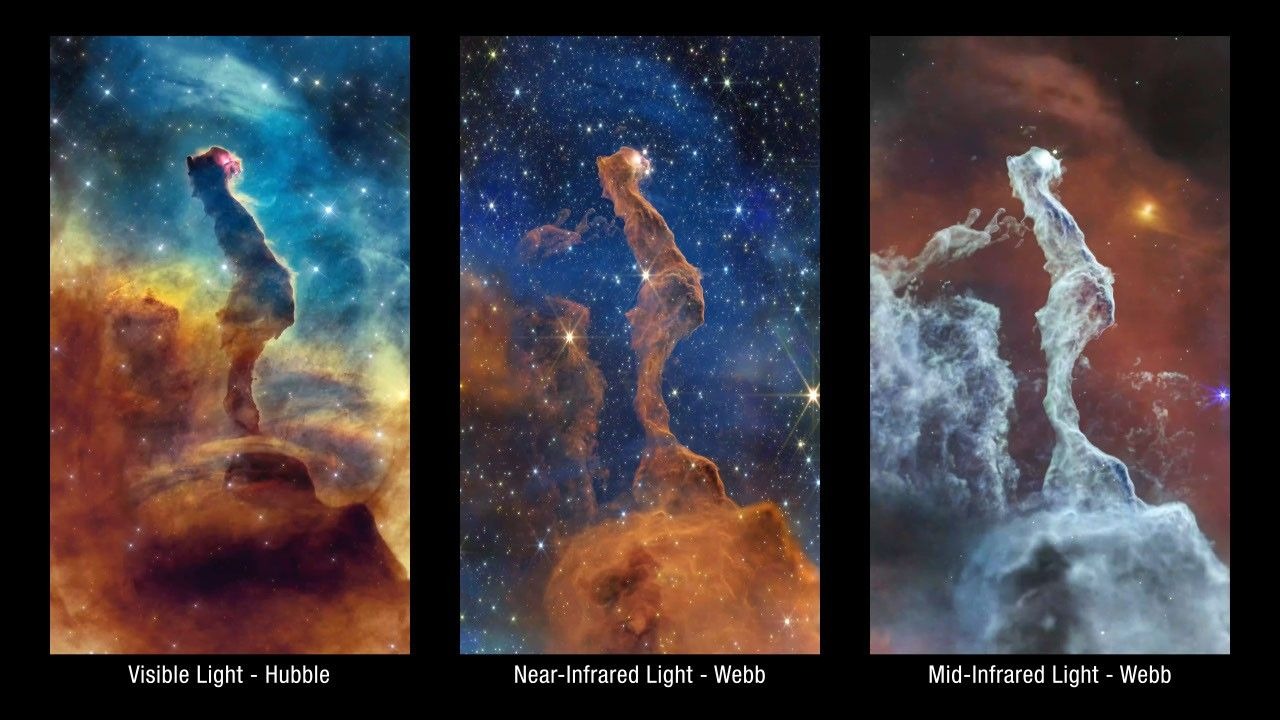
Dark pillar wey dem nickname Cat's Head Nebula look different when telescopes observe am for different wavelengths. NASA October 29 release compare Hubble and Webb views of this small region inside much bigger Carina Nebula, about 7,500 light-years away from Earth.
The cat-like outline na resemblance wey human eye notice, no be separate kind of space object. Radiation and winds from big nearby stars probably help shape the gas and dust. Dense material resist erosion longer than surroundings, creating shape wey no go last forever.
Hubble visible-light view show opaque dust pillar with bright edge. Colours around am trace glowing gas and starlight wey dust scatter. Bright feature wey resemble eye fit be young star wey dust still partly hide. That interpretation still carry uncertainty, no be final identification.
Webb near-infrared observations reveal more detail inside the pillar and many stars wey no clear for visible light. Its mid-infrared view highlight warm dust and molecules wey starlight excite. Joining the views give researchers different useful information, no be three photographs wey tell exactly the same thing.
Some things wey seem line up still uncertain. Narrow feature look like e cross bright source, but picture alone no prove say the two physically connect. In the same way, the possible young star must remain possible until more evidence establish wetin e really be.
The science value pass the memorable nickname. By comparing wetin each wavelength reveal or hide, astronomers fit study how stars form and change their surroundings. The pillar go change over time, while these observations preserve evidence of one stage inside that continuing process of star formation.