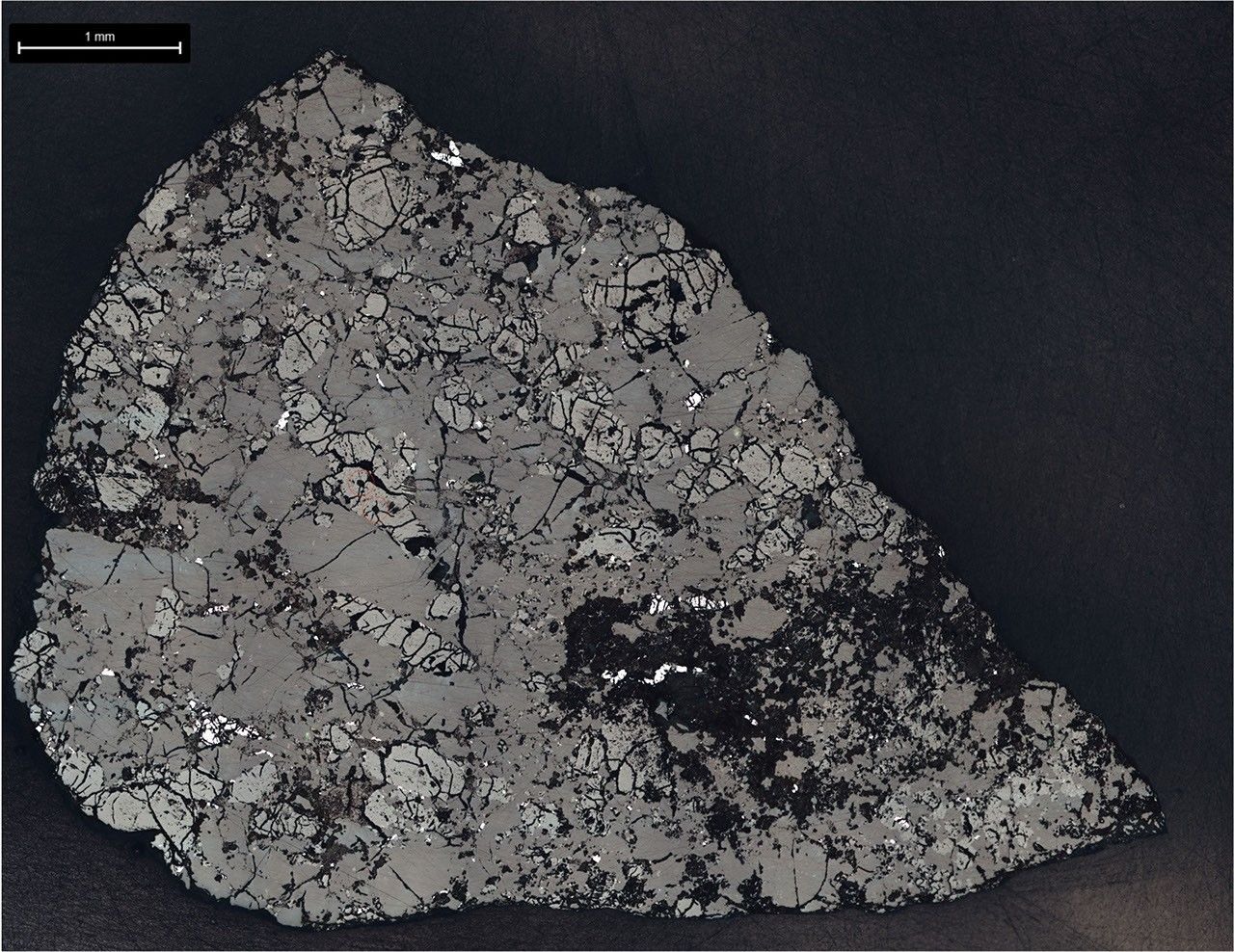
Meteorite wey dem discover for Mali in 2022 don turn out to be very old visitor from Mars. NASA report on October 29 say scientists wey study Teghaza 001 find evidence say the rock form more than 4.1 billion years ago. E give dem rare chance to understand early Mars crust.
Researchers first confirm say e come from Mars by checking oxygen isotopes. These na different forms of the same element wey fit work like chemical fingerprints. The big surprise come later, when minerals and textures show say the rock history older and more complex than the first look suggest.
Different minerals inside the rock form as hot magma cool. Scientists use zircon crystals and measurements of other minerals to investigate age. Their results suggest say water change the material about 4.1 billion years ago. That mean the original rock must don form before that water touch am.
One method check individual mineral grains inside very small piece, instead of dissolving the whole sample. This matter because Mars meteorites no plenty. If scientists preserve material, other laboratories fit ask new questions, use different instruments and check whether their conclusions agree with the first research.
Nobody know the exact place for Mars where Teghaza 001 come from. Researchers identify possible areas wey their chemistry and minerals resemble the sample, especially for southern highlands. These matches give useful context, but dem no prove the exact location of the impact wey throw the rock toward Earth.
This discovery concern rock, water and planet history; e no mean scientists don find life. More studies go examine wetin the sample fit reveal about early Mars conditions. The fact say dem find am for Mali also show how desert discovery for Africa fit contribute to important international space research.