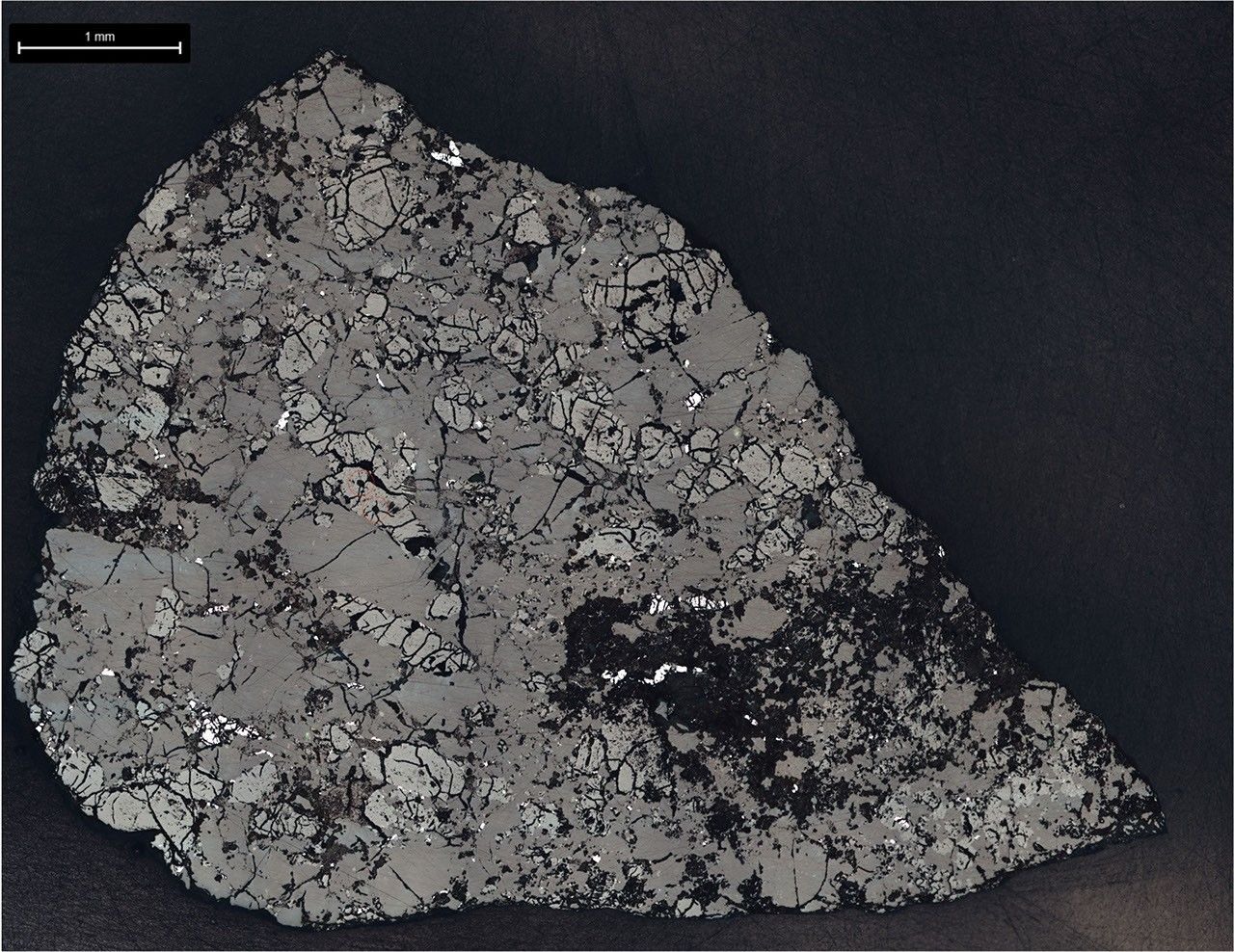
A meteorite discovered in Mali in 2022 has turned out to be an unusually old visitor from Mars. NASA reported on October 29 that scientists studying Teghaza 001 found evidence that the rock formed more than 4.1 billion years ago. Its history offers a rare view of the planet's early crust.
Researchers first established its Martian origin by examining oxygen isotopes, forms of the same element that can act as chemical fingerprints. The important surprise came later. Minerals and textures that initially seemed familiar concealed a much older and more complicated history than an ordinary first inspection suggested.
The rock contains a mixture of minerals formed from cooling magma. Zircon crystals and other mineral measurements helped the team investigate its age. The results indicate that water altered the material around 4.1 billion years ago, meaning the original rock must have formed before that alteration occurred.
A method that examines individual mineral grains helped researchers date a very small piece without dissolving the entire specimen. That matters because meteorites from Mars are scarce. Preserving material allows other laboratories to ask new questions and check conclusions using different instruments in the future.
The precise place where Teghaza 001 originated remains unknown. Scientists identified possible areas whose chemistry and minerals resemble the sample, particularly in Mars' southern highlands. Those matches provide geological context, but they do not establish a confirmed launch site for the impact that eventually sent the rock toward Earth.
This is evidence about rocks, water and planetary history, not an announcement that life has been found. Further studies will test what the sample can reveal about early Martian environments. For African readers, its discovery in Mali also highlights how a desert find can become an important part of international planetary research.