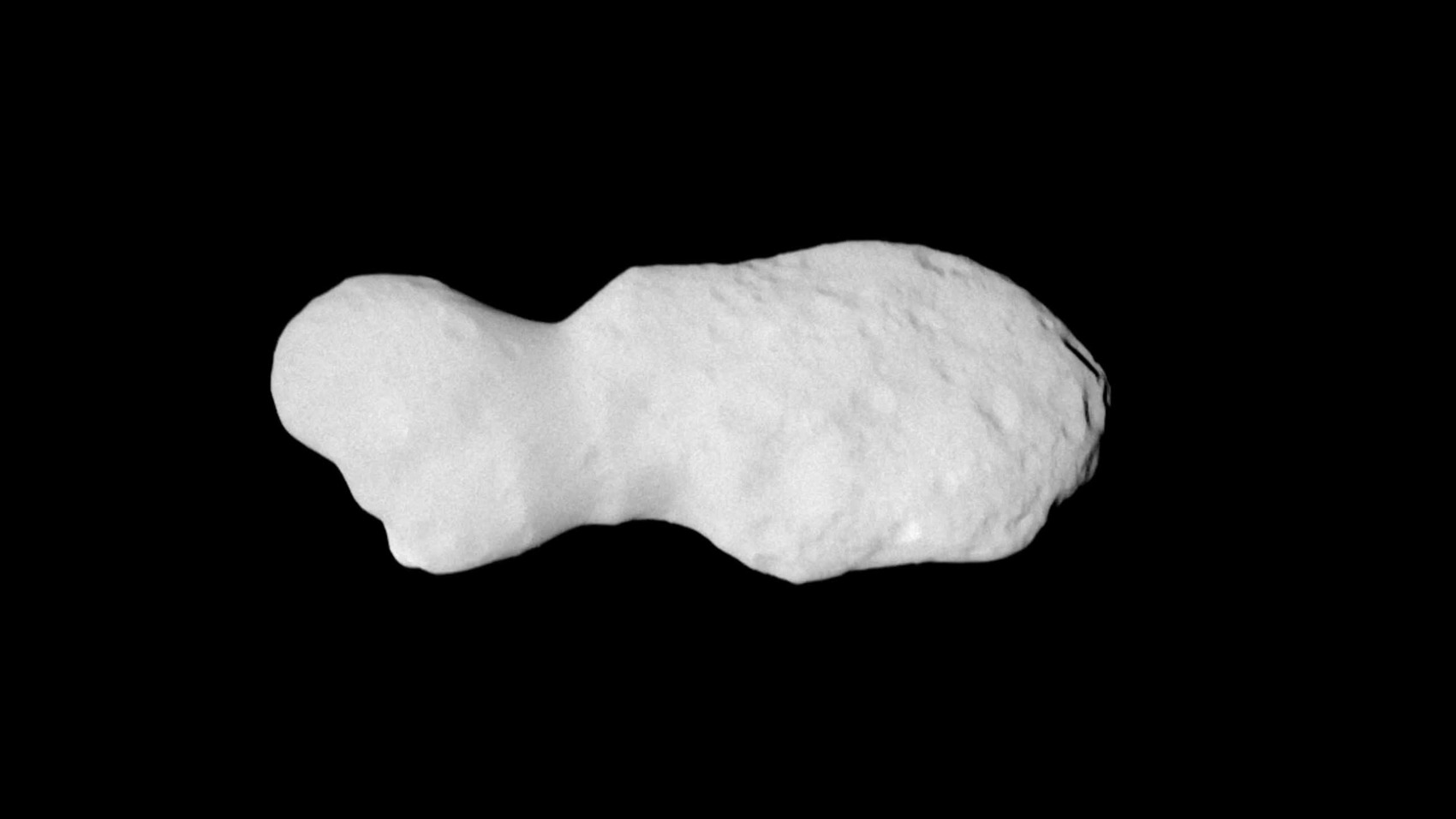
NASA June 18 report about Lucy encounter with Donaldjohanson describe asteroid wey get complicated past. Spacecraft pass about 1,000 kilometres away on April 20, 2025. E collect close-up pictures and other measurements during practice run for later encounters with Jupiter Trojan asteroids.
Donaldjohanson get two big lobes wey narrow neck join together. Researchers think say the peanut shape come from fragments wey gently join after earlier collision. So the shape no just resemble groundnut for fun; e carry evidence about how the whole object come together.
The way e rotate also complicated pass what Earth telescopes first suggest. Analysis give end-over-end rotation of about 10.5 Earth days, plus wobble around the long axis wey take about 26.5 days. The asteroid no just spin smoothly around one simple axis.
Researchers propose say solar heating help slow its rotation over millions of years. Infrared radiation wey different surface parts release unevenly create small twisting force called YORP effect. As rotation change, loose rocks fit slide down slopes, helping explain craters wey look worn down.
Lucy also detect signs of iron-rich clay minerals. These minerals show say water act for the distant past, but scientists infer shorter exposure than what evidence from Bennu and Ryugu show. This no mean say liquid water dey flow across Donaldjohanson now.
The June findings turn planned practice flyby into useful comparison between asteroids. Shape, rotation and minerals each keep different parts of their history. When researchers read them together, dem fit test how objects form, change and move long before any spacecraft reach there to inspect them.