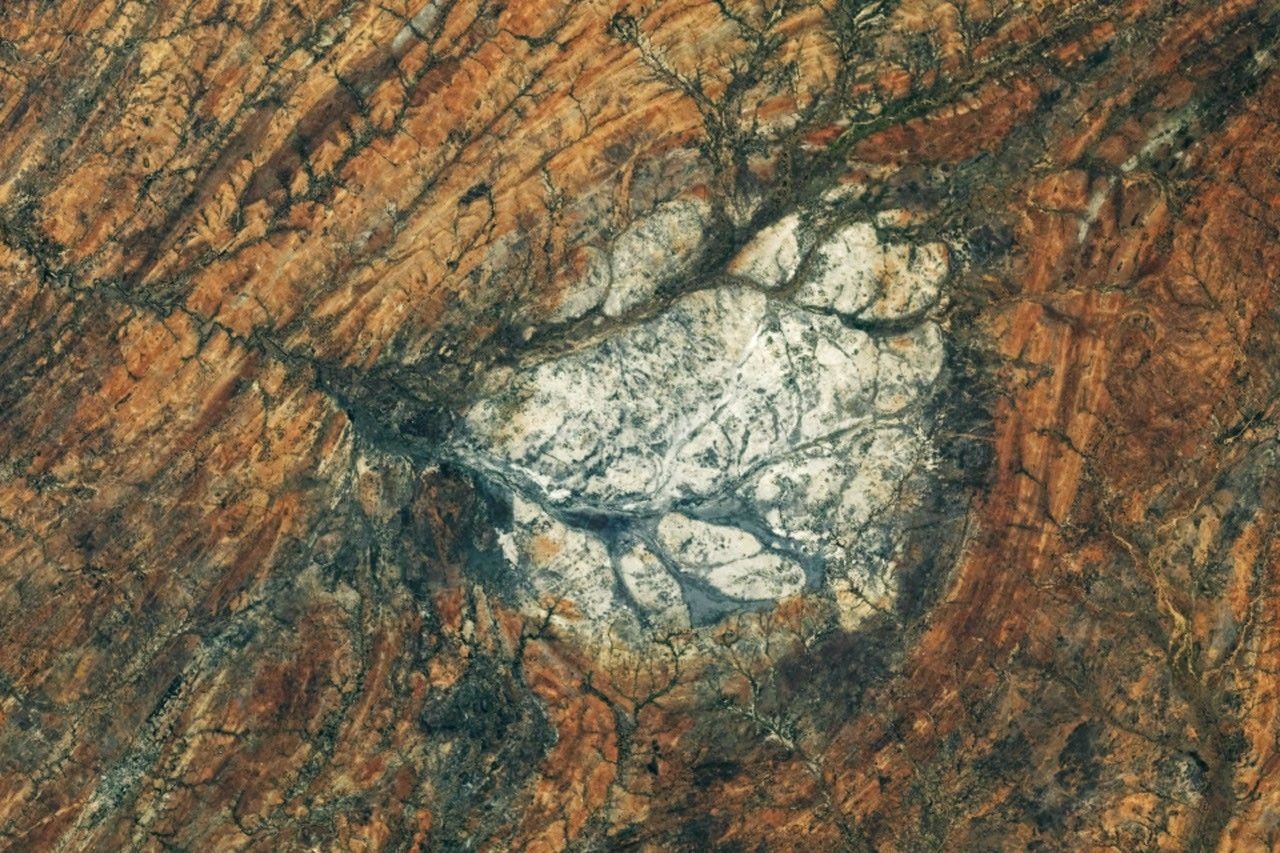
One bright patch of rock for southern Madagascar stand out against orange ground inside picture wey NASA Earth Observatory publish October 5. The round feature na Saririaky anorthosite massif, photographed from International Space Station on August 28. The fine pattern dey point to geological history wey old well-well.
Anorthosite na rock wey form when magma cool below ground and big mineral crystals grow. NASA account say this Madagascar massif form at least 600 million years ago. The rock wey show above ground cover about 100 square kilometres, so e big enough to stand out from orbit.
The ground around am carry evidence of strong deformation. High pressure and heat change and reshape the rocks, leaving long patterns wey run roughly north to south. Geologists connect this history with collisions between pieces of continents when Gondwana, an ancient supercontinent, dey form from lands wey now dey far apart.
The connection with Moon na the kind of rock, no be claim say the Madagascar formation fall from space. Anorthosite also form plenty of Moon bright highlands. But lunar examples older well; dem crystallise more than four billion years ago when the outside crust of Moon dey form.
Earth rocks therefore fit give useful comparison for scientists wey study lunar material. Apollo samples precious and no plenty, so researchers also examine suitable examples for Earth to understand how minerals and rocks form. Comparison no mean every Earth anorthosite exactly like Moon own; composition and history still matter.
This photograph na fresh view of ancient formation, no be evidence say the rock just appear. E connect observation from orbit in 2026, hundreds of millions of years of Madagascar geology and even older Moon history. The bright circle remind us say landscape fit keep records wey far older than any camera.