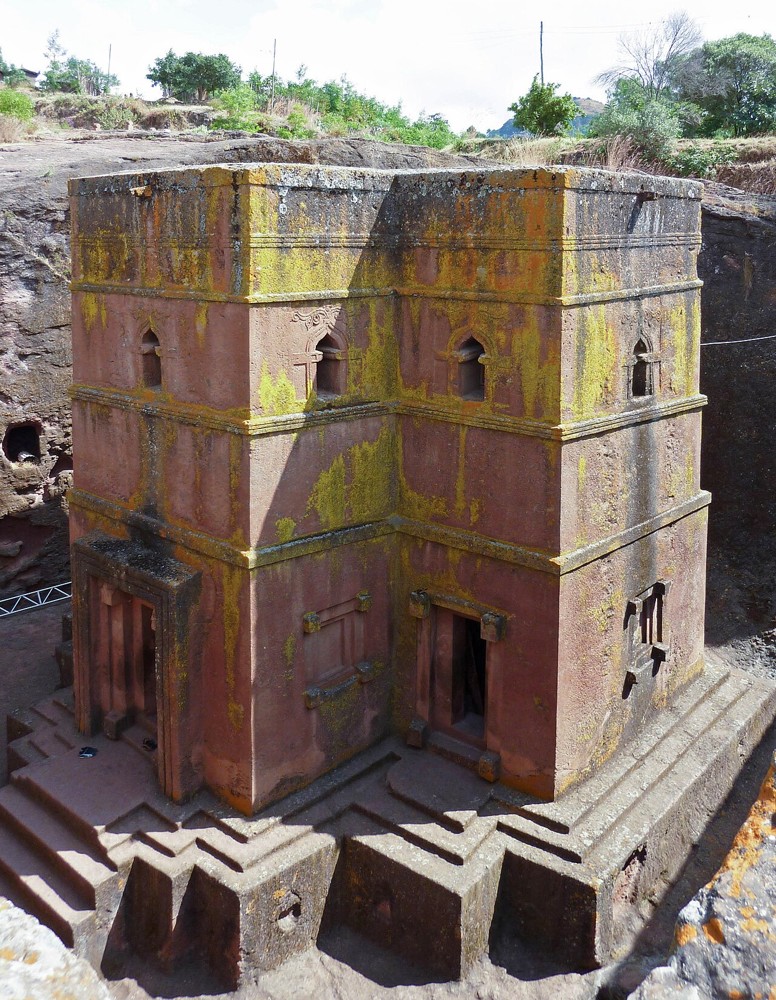
Lalibela's rock-hewn churches reward attention to the space around them as well as the buildings themselves. UNESCO's World Heritage account describes eleven medieval churches carved into the mountainous landscape of Ethiopia. This background analysis uses that undated official record, consulted on 30 October 2026; it is not a new tourism or restoration announcement.
The construction method is central to their significance. Rather than assembling conventional walls from separate blocks, builders carved doors, windows, columns and other features from rock. Drainage channels, trenches and ceremonial passages extend the work beyond the visible outline of a single church, linking architecture with movement through the site.
UNESCO describes two main groups on opposite sides of a river called Jordan. Biete Ghiorgis, the Church of Saint George, stands separately but is connected through trenches. Its cross-shaped plan is especially distinctive, yet concentrating only on that familiar form can obscure the relationships between the wider group of churches.
The surrounding settlement is also part of the story. Traditional round houses made with local stone connect the monumental churches with a history of everyday building. Reading the landscape as a whole gives a fuller understanding than treating each church as a detached object for a photograph.
UNESCO identifies continuing pilgrimage and religious practice as central to the property's significance. For a visitor, that suggests approaching it as a place with active sacred meanings. The architecture, the routes between buildings and the people using them belong to the same cultural setting, rather than separate attractions.
Conservation adds another layer: the official account discusses water damage and the effect of protective structures on the visual setting. Those descriptions explain the tension between safeguarding fabric and preserving appearance, but are not a current inspection report. Lalibela's value lies in the combined material, spatial and religious life of the place.