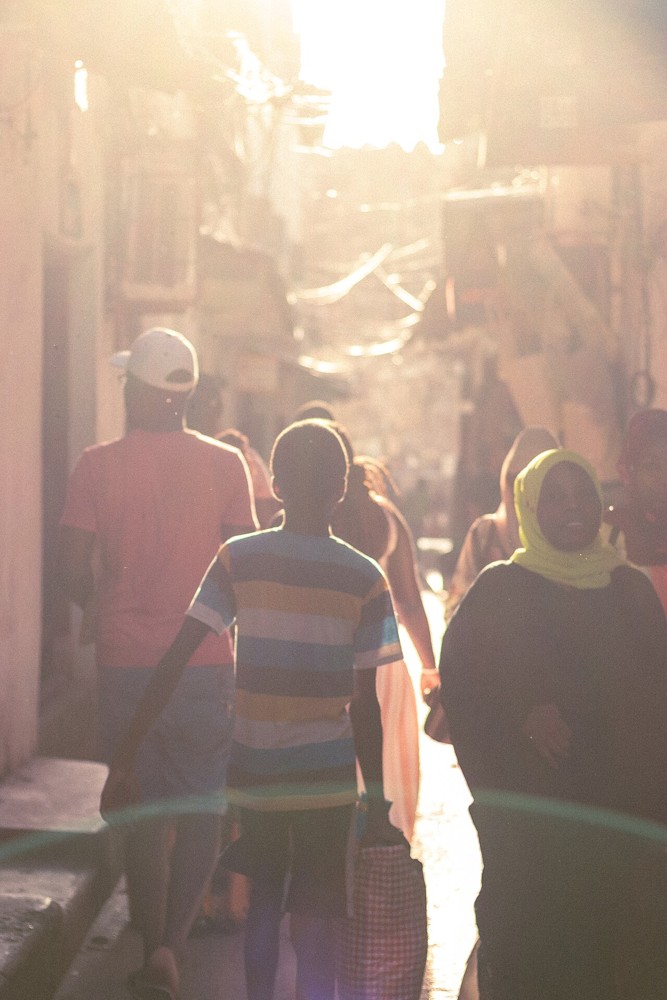
Stone Town is best understood as an inhabited trading town whose buildings and daily uses have developed together. UNESCO's official account describes a Swahili urban settlement on the western side of Unguja island in Zanzibar. This background analysis uses that undated heritage record, consulted on 30 October 2026, rather than announcing a new attraction.
Its architecture brings together African, Arab, Indian and European influences without losing the town's regional identity. The important point is the interaction between those traditions. A carved doorway or a courtyard can be read alongside the street and neighbouring buildings, rather than reduced to a single cultural label.
UNESCO describes construction using coral ragstone, mangrove timber and lime mortar, with plastered surfaces and distinctive doors. Courtyard houses, shops and simpler Swahili homes create different kinds of space. Those details help explain why preserving a historic town involves materials and craft knowledge as well as keeping its outlines intact.
The waterfront belongs to the same story. Seaborne trade connected the town with other shores of the Indian Ocean, while narrow streets linked commercial and residential life inland. The relationship between buildings, open spaces and access to the sea is part of the heritage value, not merely a convenient route between monuments.
The official account also emphasises continuing residential and commercial use. Tourism therefore shares space with people going about ordinary work and home life. Looking at Stone Town only as a collection of attractions can hide the demands placed on housing, public space and the businesses serving residents.
That creates a lasting conservation question: how can a functioning town change while retaining the relationships that give it character? UNESCO identifies development pressure in its description, but that record is not a current construction or access bulletin. For understanding the destination, the strongest starting point is the connection between living community, built fabric and maritime history.