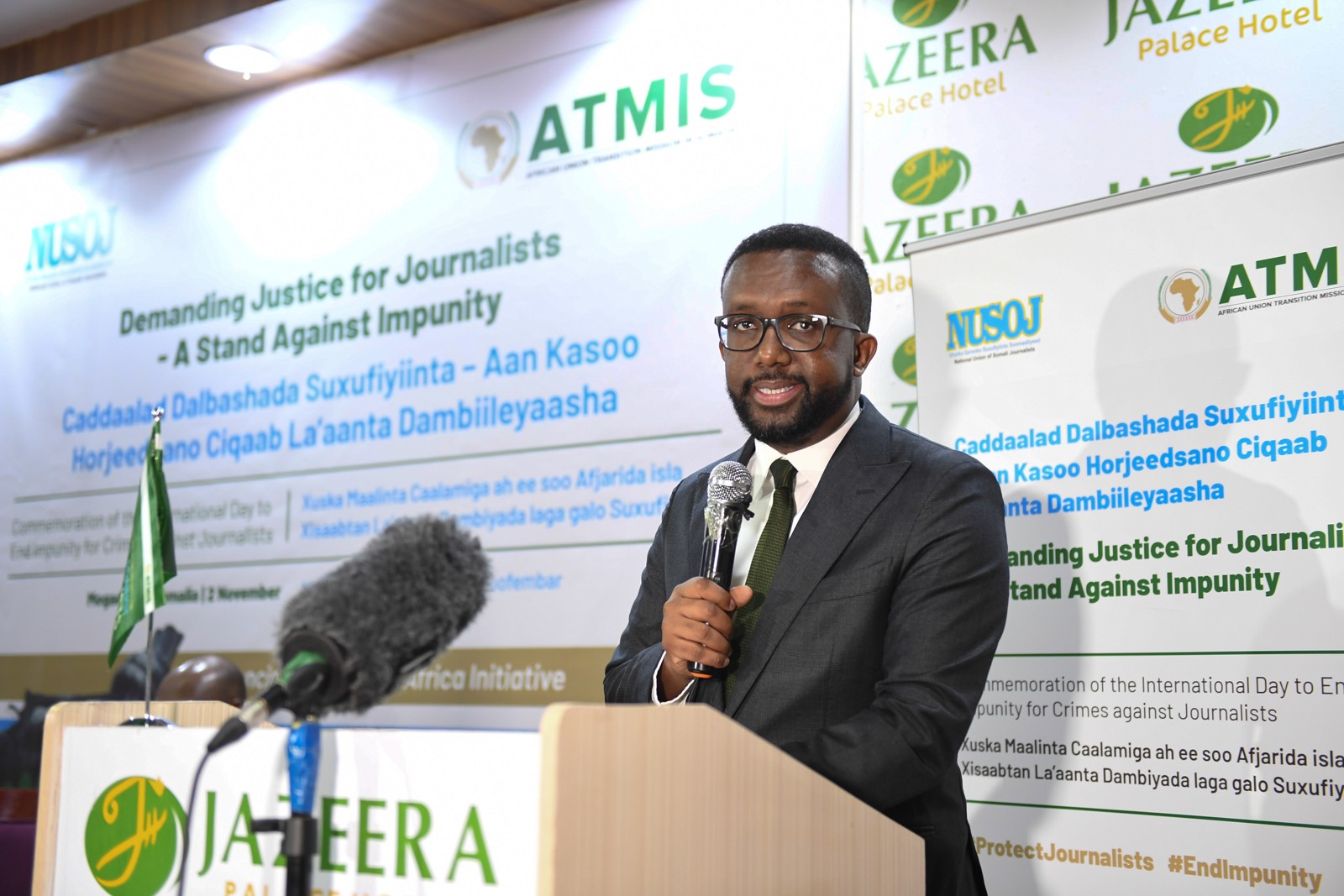
African governments have been urged to strengthen protection for journalists and investigate attacks against them, in a joint statement issued on 2 November by the African Union Commission and the Federation of African Journalists. The appeal links the safety of reporters to the public’s ability to obtain information and take part in civic life.
Bankole Adeoye, the AU commissioner for political affairs, peace and security, and federation president Omar Faruk Osman signed the statement. They called for national safety mechanisms, protection for reporters covering elections and protests, and action against digital harassment and surveillance. They also asked that journalists help shape and monitor the measures intended to protect them.
The appeal includes the particular threats faced by women journalists. Its proposals concern prevention, protection and accountability. It asks authorities to investigate crimes, pursue those responsible and provide remedies for victims. These are demands for action across member states. The statement does not announce a new Nigerian protection scheme or demonstrate that individual cases have been resolved.
The date carries a wider history. The UN General Assembly established the observance in 2013. According to UNESCO, 2 November commemorates two French journalists killed in Mali that year. The organisation connects the issue to the loss of information about corruption, crime and abuses when journalists cannot work safely.
UNESCO also released its director-general’s report on journalist safety on 2 November. Published every two years, the report examines threats to media workers and whether killings lead to judicial accountability. Its international scope matters when reading the findings. A global assessment does not establish what happened in a particular Nigerian case or whether an investigation there has succeeded.
What it means for you. The test of a safety commitment is what follows it. For readers in Nigeria, useful follow-up questions include whether an attack is investigated, whether affected journalists can continue reporting, and whether authorities explain the outcome. A public declaration gives a benchmark for asking those questions. It does not answer them by itself.