The leg bone of a dinosaur from northeastern Brazil still holds chemical clues to what once passed through it. A team led by Kliti Grice at Curtin University reports evidence that microscopic structures inside the bone may be the mineralised remains of red blood cells. The identification has drawn questions from outside the team.
The paper appeared in Proceedings of the National Academy of Sciences on 2 November. The animal, Aratasaurus museunacionali, lived about 115 million years ago. The fossil was found in a mine in 2008. What is new is an analysis of material preserved inside the bone, where narrow channels once carried blood vessels.
The researchers looked for two kinds of evidence. Under magnification they saw oval structures confined to the channels. Chemical tests on bone extracts also detected heme B and products of its alteration. Heme is the part of haemoglobin that helps red blood cells carry oxygen. The surrounding rock gave a different chemical signal associated with pigments from organisms that use light.
One reason the team links the results is location. Further tests picked up chemical signals associated with heme within the oval structures themselves. The researchers also identified a manganese mineral called hausmannite. They suggest that mineralisation helped preserve traces of the original tissue after burial. The sequence of events is their proposed explanation.
Not everyone agrees that the shapes are fossil blood cells. Mary Schweitzer, a palaeontologist who did not take part, told ABC that she did not find the cell evidence convincing. The debate centres on what specific structure left the traces. Simply finding an outline that resembles a cell would not settle that question.
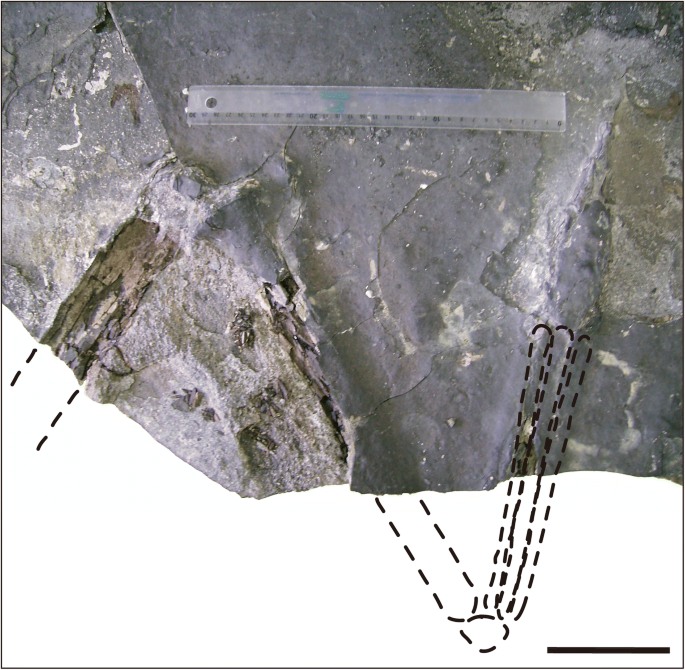
What it means for you: the photograph shows a leg fossil, while the blood claim depends on instruments able to examine features far smaller than the eye can see. The team reports molecules and minerals. Tests for ancient DNA were negative. There is no sample of liquid dinosaur blood in this discovery.