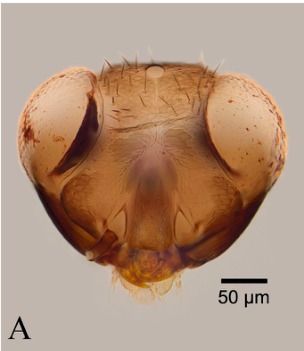
A new species can be found close to a classroom. Researchers who set insect traps on the grounds of Shangrao Normal College in China have described a tiny wasp that had no scientific name. Their study, published in the journal Insects on 4 November, identifies three species from the same genus on the campus in Jiangxi province.
Only one of the three is new to science. Its name is Centrodora raoshiensis. The other two already had names, Centrodora pellucida and Centrodora lineascapa. The researchers report them in Jiangxi for the first time. That distinction matters because the first published record from a province says where an animal has been documented, rather than when it arrived there.
The work behind those names took several years. From 2021 to 2025 the campus survey collected more than 250 specimens from the wider family of wasps. The team used yellow pan traps and tent-like traps that intercept flying insects. The female specimen chosen to serve as the reference for the newly named species came from a trap set between May and June 2024.
The investigators extracted DNA and examined body parts under a microscope. Features of the antennae helped distinguish the new wasp from a similar species. The researchers could also compare males and females that looked different, using the DNA evidence, the physical features and information about where the insects were collected.
For one genetic comparison the team examined six new sequences alongside 176 that were already public. The results supported the three groups the researchers had identified by their physical features. The paper also describes the male of C. pellucida for the first time and updates a guide used to tell Chinese species of the genus apart.
What it means for you. When reading a claim of a new species, check whether the authors actually give an animal a new scientific name, or document a familiar species in a new place. Both findings came from this one campus. Neither establishes how common the wasps are across China or whether they live in Nigeria.