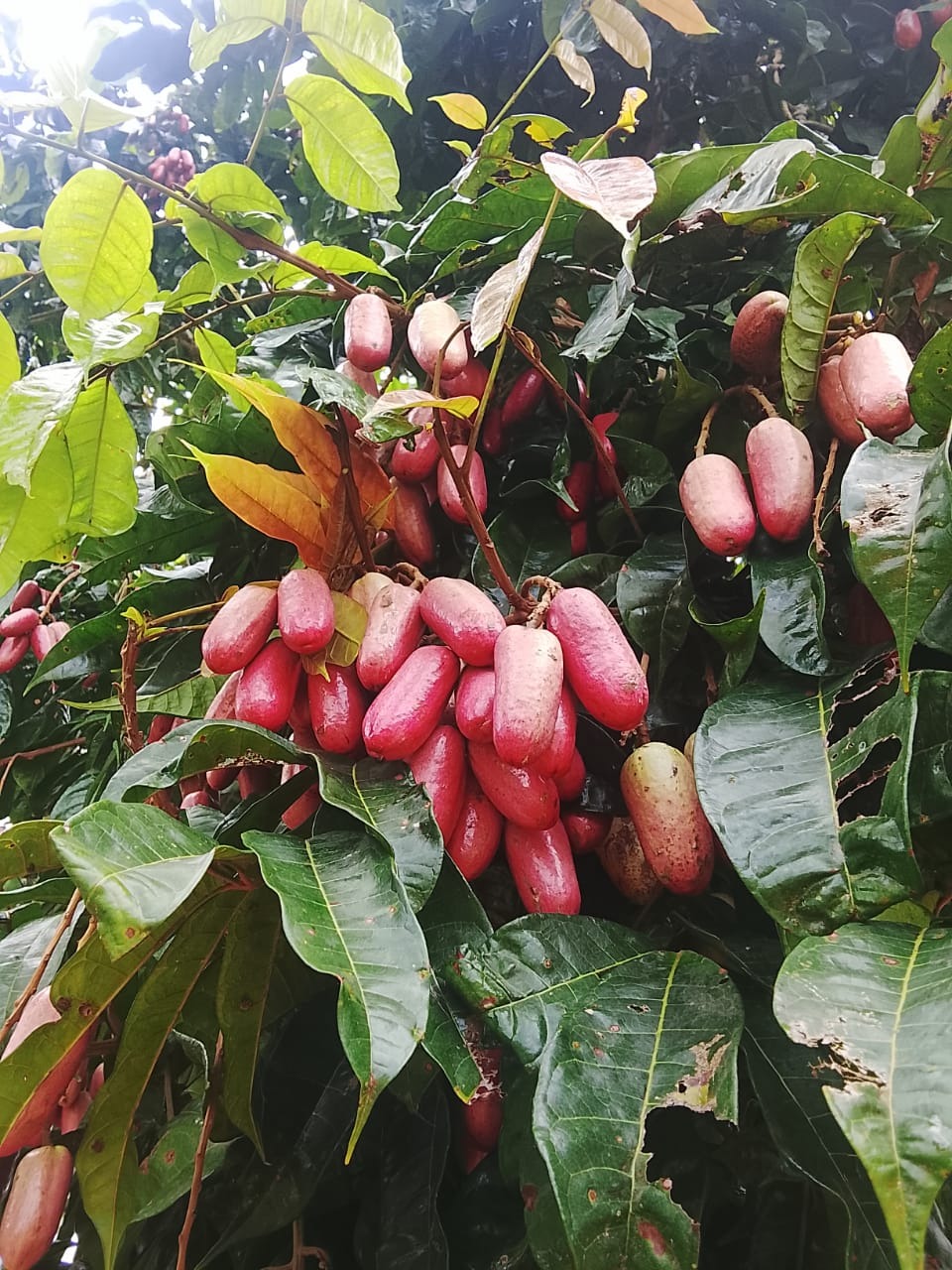
Two growers can both see marks on the leaves of an African pear tree and still face different problems. A research team at the University of Dschang has mapped diseases of the fruit tree across three growing zones in Cameroon. The study, published on 3 November, found that the disease causing the most severe damage in one zone was not necessarily the most severe in another.
The tree is Dacryodes edulis, also called African plum or safou. It is grown for fruit that people eat and sell. The team covered 14 villages in the western highlands, 18 in a forest zone with two rainy periods and six in a forest zone with one rainy period. It randomly selected one orchard per village for its measurements.
Investigators examined signs on leaves and fruit and noted conditions around the trees. They combined field observations with laboratory work to isolate disease-causing organisms and test their ability to cause disease. They also recorded tree locations. This made it possible to relate the different patterns of damage to places on a map.
Cercospora leaf spot was the most severe disease in the highlands and in the forest zone with two rainy periods. Anthracnose ranked highest for severity in the forest zone with one rainy period. The study also reported problems including dieback, red rust and rot around the point where fruit attaches to its stalk.
A map of affected trees and a score for damage on a tree answer different questions. For disease incidence, the team counted the proportion of examined trees that were infected. To assess severity, it examined damage around the canopy. A high severity score is not the percentage of the national crop lost.
What it means for you. A Nigerian grower who recognises the fruit can use the distinction when describing a problem: how many trees show damage, which parts are affected, and how much damage can be seen? The Cameroonian survey gives a useful comparison. It does not diagnose a Nigerian orchard or establish which treatment would work there.