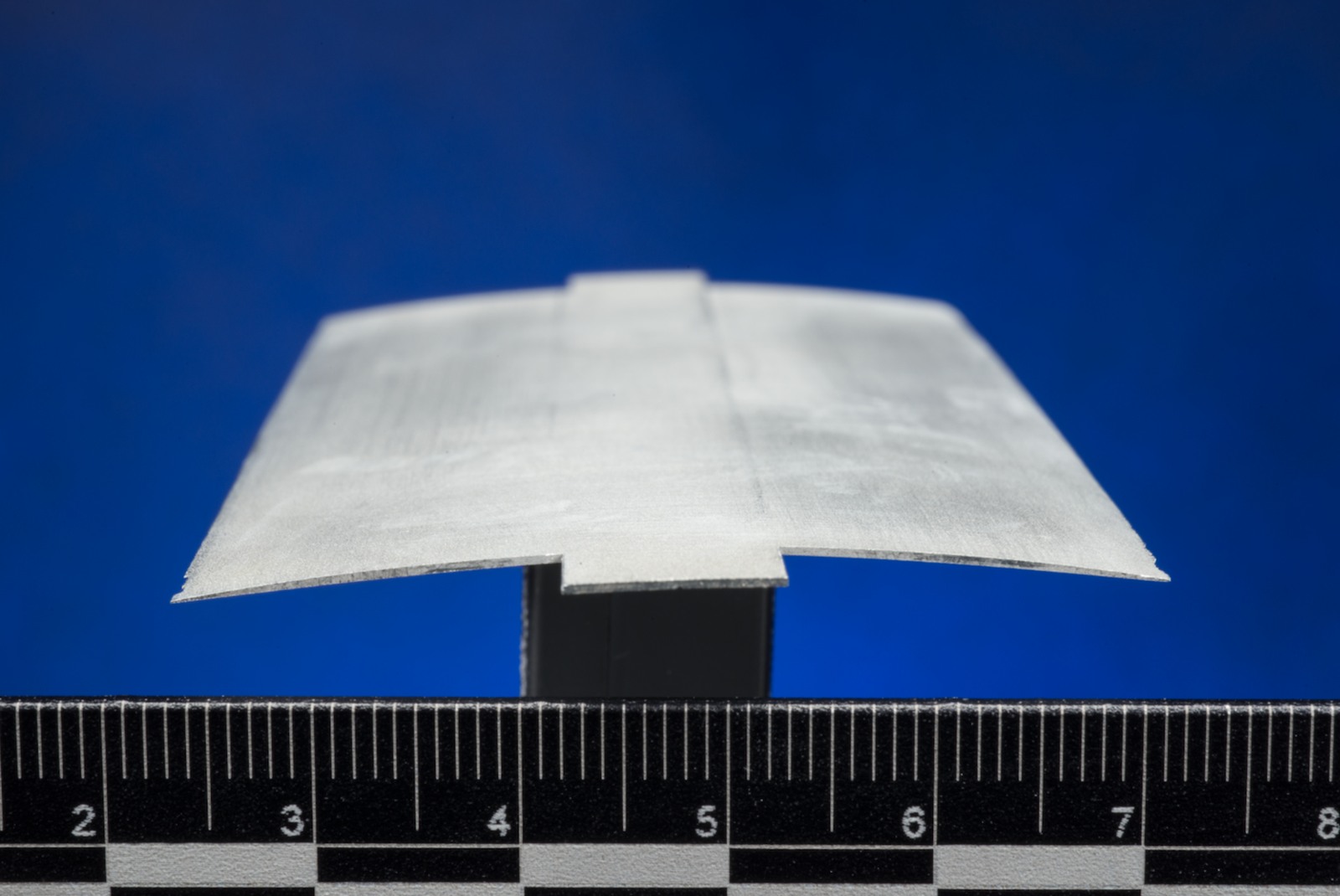
NASA researchers are exploring a surprisingly thin and sharp rotor-blade design that could help future helicopters travel farther on Mars. An October 20 account describes computer modelling and wind-tunnel work on an airfoil called roamx-0201. The work concerns an experimental component, rather than a newly launched aircraft.
Flying on Mars is difficult because its atmosphere is thin. A rotor must generate useful lift under conditions very different from those near Earth's surface. Engineers also have to manage the behaviour of air as blade speeds approach the local speed of sound, where drag can increase sharply.
The team used detailed simulations and design algorithms to investigate alternatives to the shape flown by Ingenuity. Their candidate is thinner and asymmetrical. NASA says tests showed improved aerodynamic performance and more favourable behaviour when the angle of incoming airflow pushed the blade toward stall, a condition that reduces lift.
Another unusual feature is how the proposed blade handles airflow near its surface. The design deliberately disturbs the boundary layer near its leading edge. Under the conditions studied, that disturbance helped the blade produce lift rather than simply spoiling its performance. It is a specific engineering result, not a universal rule for aircraft.
Models suggest large improvements in possible flight range when the new design is compared with Ingenuity. Those estimates should not be read as distances already flown. A complete helicopter also needs suitable motors, structure, energy storage, navigation and scientific payloads; a successful blade test alone does not validate that entire system.
NASA describes the research as groundwork for missions beyond the planned SkyFall helicopters. Further testing must reconcile differences between predictions and measured behaviour before the technology is ready for Mars. The achievement so far is a better-tested design direction that could expand what small robotic aircraft eventually investigate on another planet.