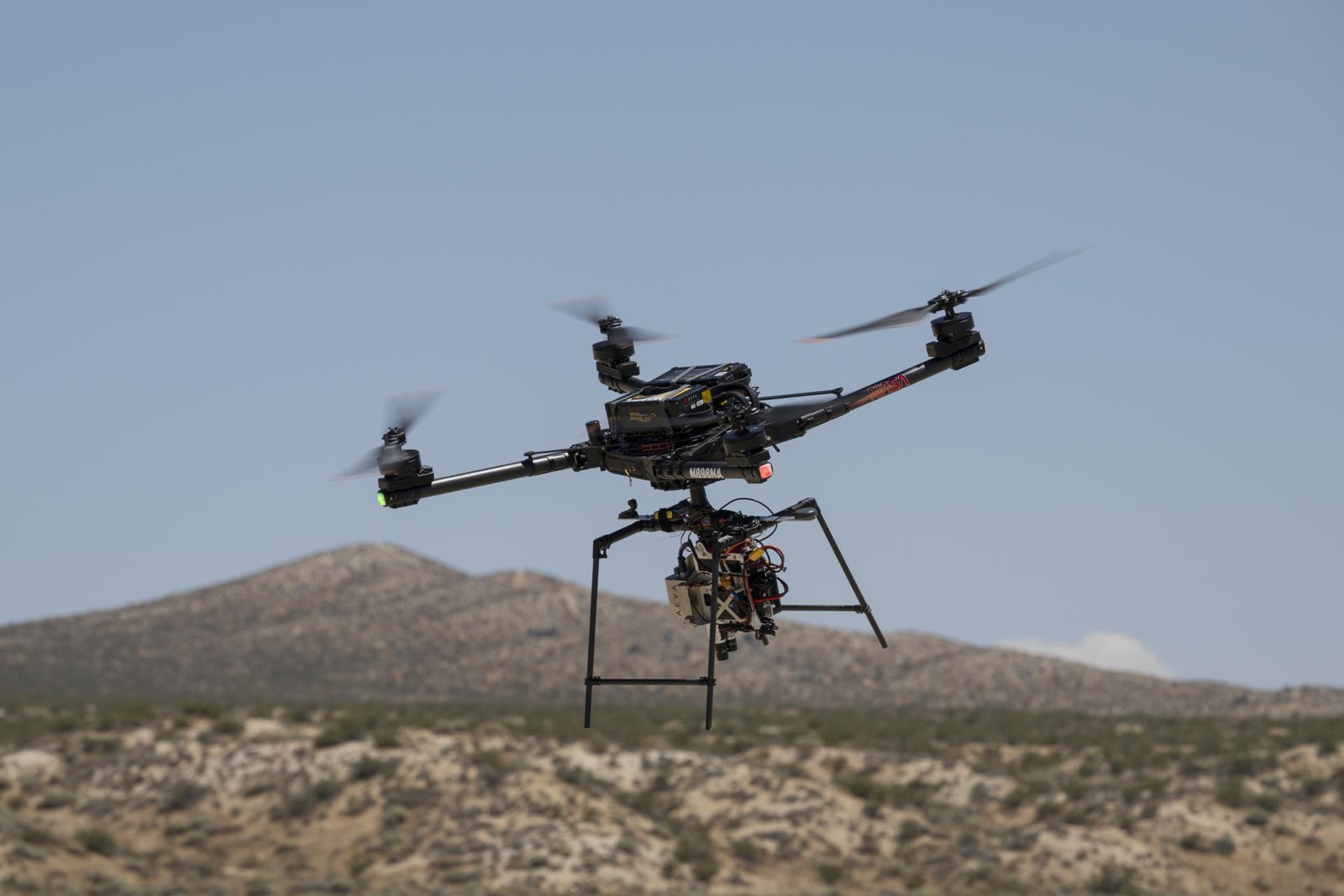
A spacecraft heading towards an unfamiliar surface needs more than a destination. It must work out where it is, recognise hazards and choose where to touch down. NASA described progress on that problem on 4 November, reporting a drone demonstration of its SPLICE landing technology in California.
The flight took place on 27 August at Rogers Dry Lake, near the agency’s Armstrong Flight Research Center. An Alta-X drone carried the guidance, navigation and control equipment through manoeuvres that simulated a lunar descent and landing. The November publication reports a completed Earth test, not a new landing on the Moon.
During the test, the equipment mapped terrain and assessed possible landing areas. NASA says the system can redirect the drone if it judges the intended site unsafe. This puts observation and response together: identifying an obstacle is useful only if the vehicle can act on that information before reaching the ground.
SPLICE combines several technologies rather than relying on a single camera. Its project description includes laser measurements of speed and height, three-dimensional hazard mapping, and a computer that processes sensor readings. Terrain-relative navigation compares live camera pictures with existing images from orbit to help determine position. These components address different parts of the landing problem.
The project began in 2017. Earlier flights in June and July checked communication and command handling between the equipment and the drone. NASA says the work has advanced the system’s readiness for integration into future missions. That does not establish that every future landing will succeed, or that the system is already operating routinely on another world.
What it means for you. For Nigerian students following robotics and space engineering, the useful distinction is between a successful demonstration and a finished service. This experiment shows how sensors, mapping and control can work together in a real flight. Its value lies in what was tested and measured, while lunar and Martian applications still require further development and mission-specific integration.