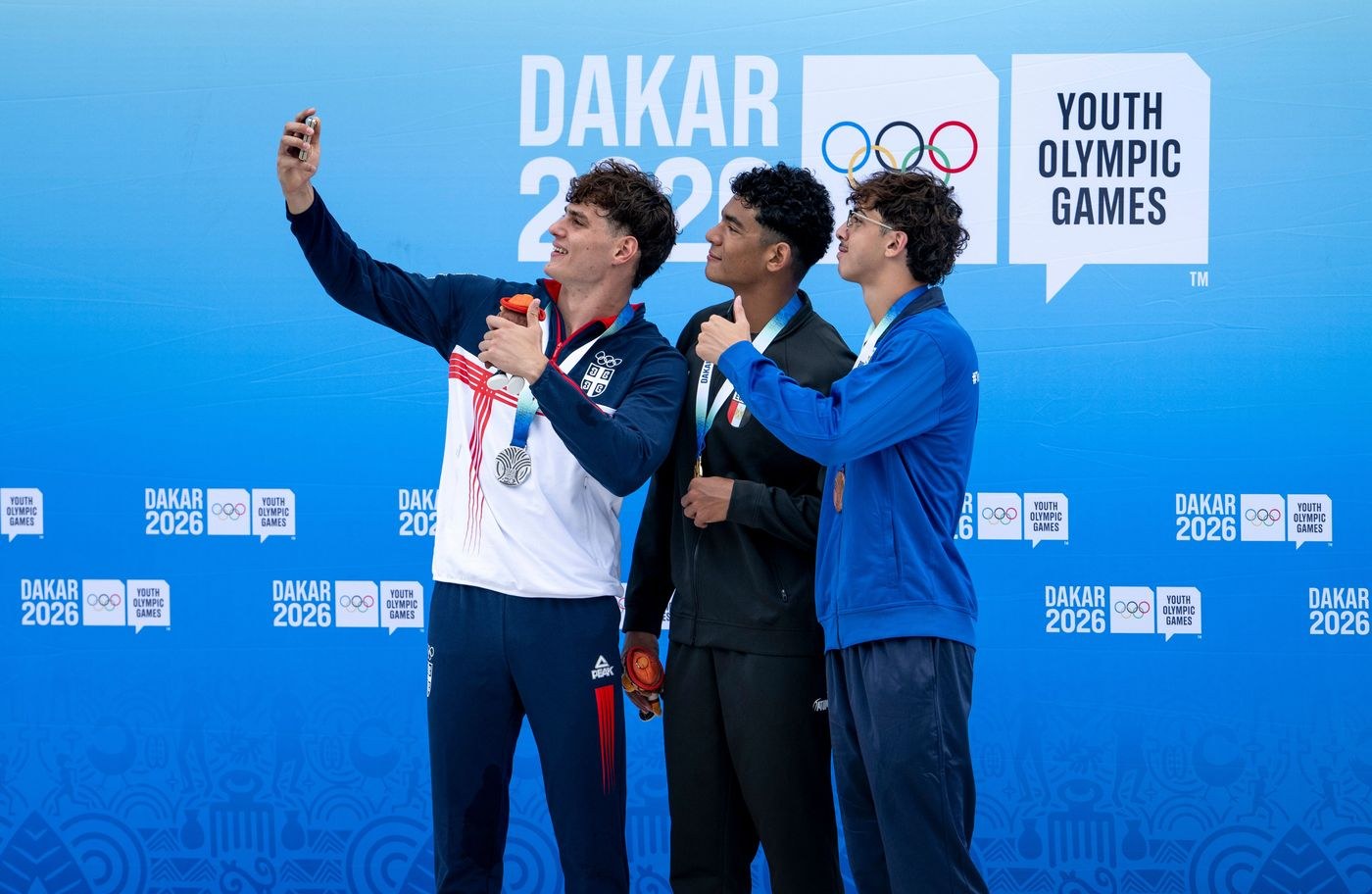
Egypt’s Zain Ali won the men’s 50-metre butterfly at the Dakar Youth Olympic Games on 4 November 2026, completing a two-title achievement for his country. World Aquatics says he is the first Egyptian swimmer to win two gold medals at a single Youth Olympic Games. His earlier victory came in the 100m butterfly on 1 November.
Ali finished the shorter final in 24.06 seconds. Serbia’s Aleksej Kalanj earned silver in 24.54, with Andrew Marcus Laghoutis of Cyprus taking bronze in 24.57. The published results therefore put Ali 0.48 seconds ahead of second place, while just 0.03 seconds separated the silver and bronze medallists. These are completed race results, rather than qualifying targets.
The result follows a more substantial winning margin in Ali’s first final. On 1 November he recorded 52.16 seconds over 100m, ahead of Kalanj’s 54.03 and Slovakia’s Matiáš Krištof on 54.71. Kalanj consequently took silver behind Ali in both butterfly distances. The new achievement is the second gold and the resulting national milestone; the first victory remains a separate, earlier event.
The 4 November results also show Ali swimming 24.00 seconds in his qualifying heat, compared with 24.06 in the final. His final was therefore six hundredths of a second slower than that earlier swim, yet it won the medal race. A fastest heat time and a winning final time answer different questions: qualification decides who progresses, while the final determines the podium.
The historical claim needs its full boundary. World Aquatics identifies an Egyptian first in swimming at one Youth Olympics. That does not establish a world record, an African speed record or a senior Olympic title. The federation also describes Ali as a four-time national champion this year, placing the Dakar results alongside an existing domestic record of success.
What it means for you: Nigerian readers following African sporting excellence have a specific achievement to celebrate and compare: two butterfly golds for an Egyptian athlete in Senegal. Keep the distance, competition and date attached when sharing the result. The medal distinction explains the significance without turning a youth competition milestone into an unsupported claim about the fastest swimmer in the world.