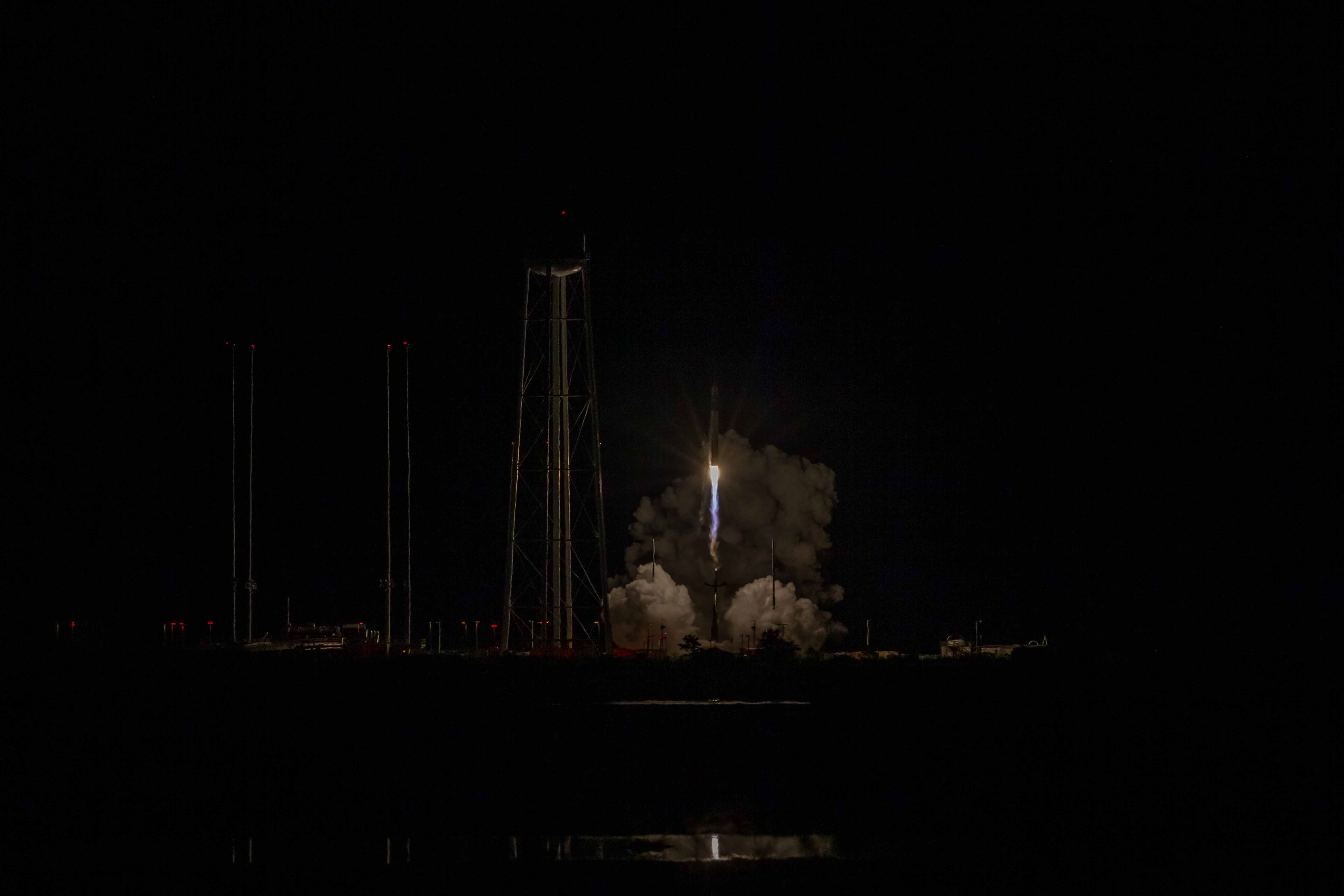
Japan’s iQPS announced on 2 November 2026 that its QPS-SAR-20 radar satellite, named WADATSUMI-II, is scheduled to launch aboard Rocket Lab’s Electron rocket. The published window opens at 16:30 UTC on Monday, 2 November — 5:30 pm in Nigeria. The timing is a no-earlier-than target, not a guarantee of liftoff or confirmation that the spacecraft has reached orbit.
The mission is called The Sea God Surveys and is due to fly from Rocket Lab’s Launch Complex 1 in New Zealand. The same moment falls on Tuesday, 3 November, at 5:30 am in New Zealand daylight time and 1:30 am in Japan. Different calendar dates in the announcements therefore do not necessarily mean different missions or contradictory launch days.
Both the customer’s new announcement and Rocket Lab’s mission page list the 16:30 UTC window opening. Older launch listings show 16:41 UTC. Readers following the flight should check the operator’s current mission page close to departure, because schedules can change. This report uses the newly published customer notice and the matching mission page rather than presenting an older tracker time as fixed.
The planned destination is low Earth orbit at an altitude of 575 kilometres. Rocket Lab lists an orbital inclination of 42 degrees and describes this as its tenth Electron flight for iQPS. The payload is one QPS-SAR satellite. Those details are mission plans: successful launch, deployment and subsequent operation each require separate confirmation.
iQPS is building a commercial synthetic aperture radar imaging network. Rocket Lab describes the intended service as high-resolution and near-real-time Earth imagery. That is the companies’ stated purpose for the developing constellation; this launch announcement does not prove that the complete planned network or all its promised capabilities are already operating.
What it means for you: Nigerian readers can follow the announced window without confusing Japan’s Tuesday date with Nigeria’s Monday evening. The sources do not announce a Nigerian contract, a free imagery service or a local application opportunity. For students watching the mission, distinguish liftoff from payload deployment and later useful observations. A successful rocket flight alone would not establish that a new imaging service is available to Nigerian users.