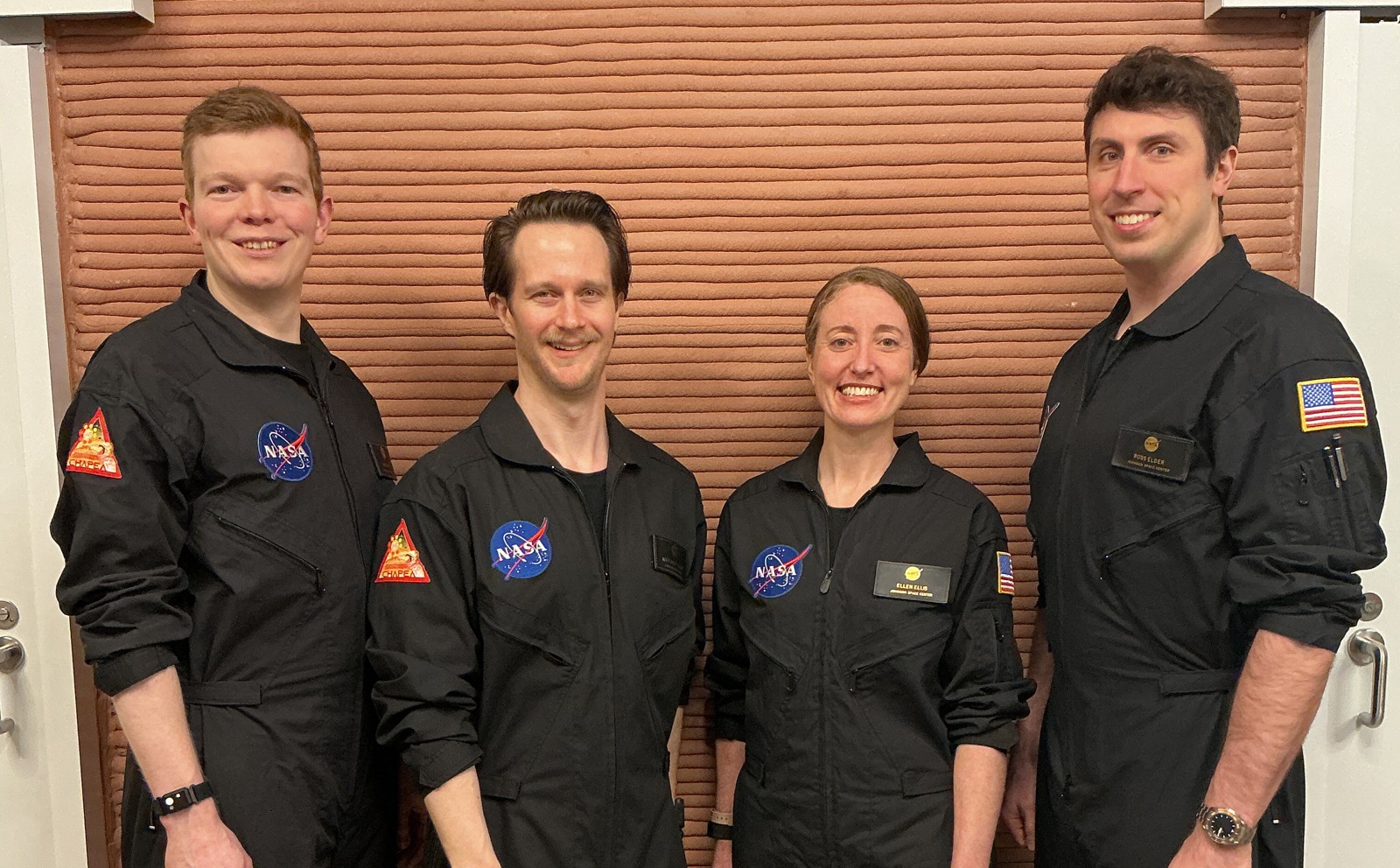
Four members of NASA's second CHAPEA mission have spent a year living inside a simulated Mars habitat in Houston. The agency marked the milestone on October 19. Their scheduled October 31 exit remains ahead of this report, and should not be described as an event that has already happened.
The crew entered the enclosed, three-dimensional-printed habitat in October 2025. Their work has included growing crops, maintaining equipment and managing limited resources. Activities outside the living area take place on a simulated Martian surface, allowing researchers to examine operational routines without leaving Earth.
Communication is another deliberate constraint. Messages have been delayed to represent the difficulty of relying on distant mission control. That changes how a crew plans work and makes decisions: an immediate answer from a specialist cannot always be assumed when a practical problem arises.
NASA plans evaluations and debriefings after the crew leaves. Those sessions will put the collected observations into context and help researchers examine how the team adapted over time. Completing a year inside the habitat is an operational milestone, rather than publication of final scientific findings.
A ground simulation cannot reproduce every aspect of spaceflight. Its usefulness comes from studying selected conditions in a controlled setting, alongside other research. The lessons concern daily work, resource use and coordination; they do not establish that every challenge of a real Mars expedition has been solved.
The next stage is therefore interpretation as well as the crew's return to ordinary life. Researchers will examine the evidence before drawing wider conclusions about future exploration. The people in the photograph are on Earth, helping test what working far from Earth might demand.