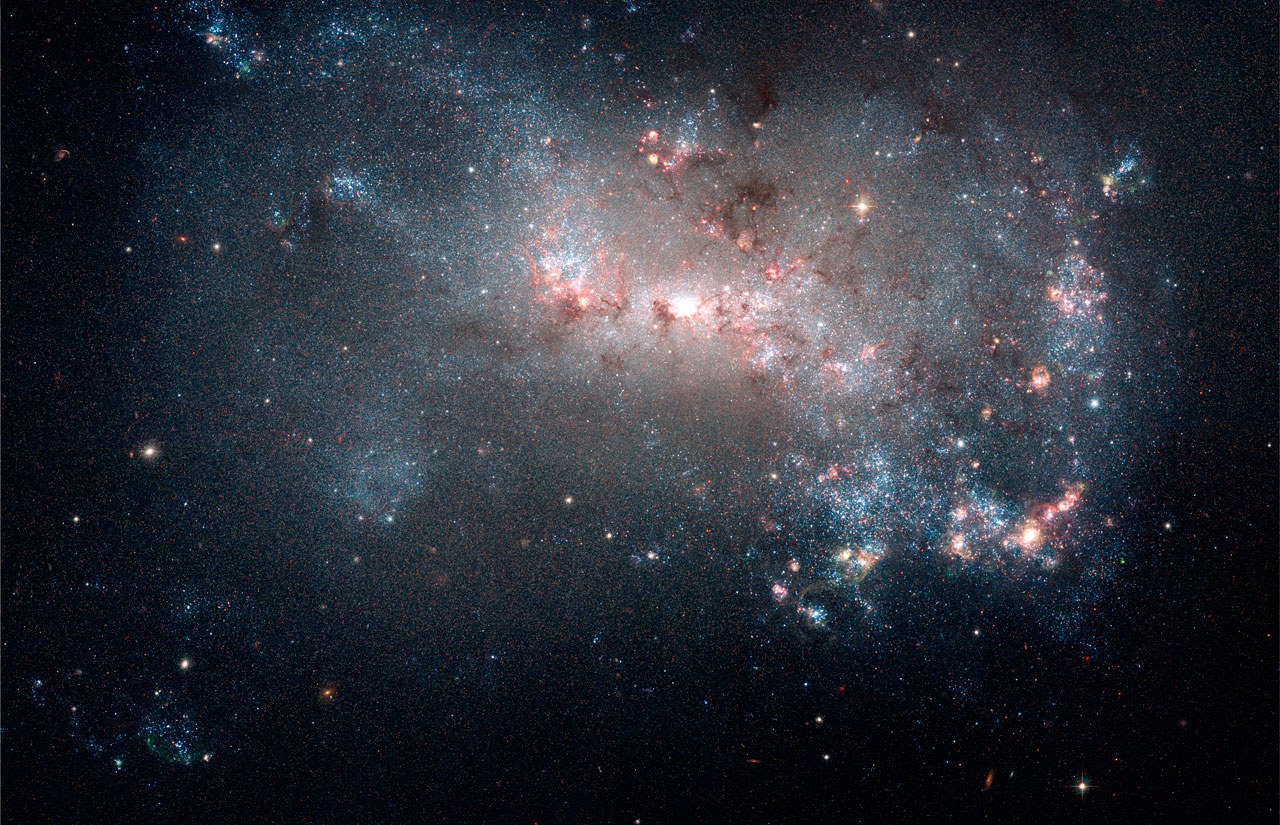
Think of di oxygen inside one galaxy like account book. One side show wetin di stars don make over time. Di other side show wetin astronomers still fit account for inside di galaxy. For di study wey NASA report on 2 November, big gap dey between di two sides. Across 37 small galaxies wey dey near us, dem estimate say on average 11% of di oxygen wey di stars make remain inside.
Di figures no be di same everywhere. Di estimates range from 4% to 25%, and almost all di oxygen wey remain dey inside gas. Di percentage mean di share wey di galaxies keep out of all di oxygen wey their stars make. E no tell us how much oxygen dey for any planet atmosphere.
To work out production, di team use old Hubble observations of individual stars. Di galaxies near enough make di telescope see different stars separately. Di groups of stars give clues about when stars form. Di scientists combine dis history with other observations, including radio measurements of gas, to compare production with di oxygen wey dey there today.
One possible reason na energy from massive stars and stars wey explode. E fit drive gas go outside. Wetin dem observe suggest say these flows fit carry material comot from small galaxies better than some computer models predict. Scientists don detect oxygen for gas wey surround small galaxies. Dem never know whether most of di missing oxygen dey there or e don go further into di space between galaxies.
Dem choose di sample with purpose. Plenty gas dey inside di galaxies, and their masses fall for one range where computer models predict say star explosions suppose fit push material comot well. As di galaxies near enough, di team fit check dat prediction against di history of each one.
Wetin e mean for you: when you read dis discovery, separate wetin di picture show from wetin dem use calculation find. Di picture show one galaxy wey join di study. To get di percentages, dem compare measurements with wetin dem work out about di galaxies’ past. Dem fit see di gap even though dem never map where every atom end up.