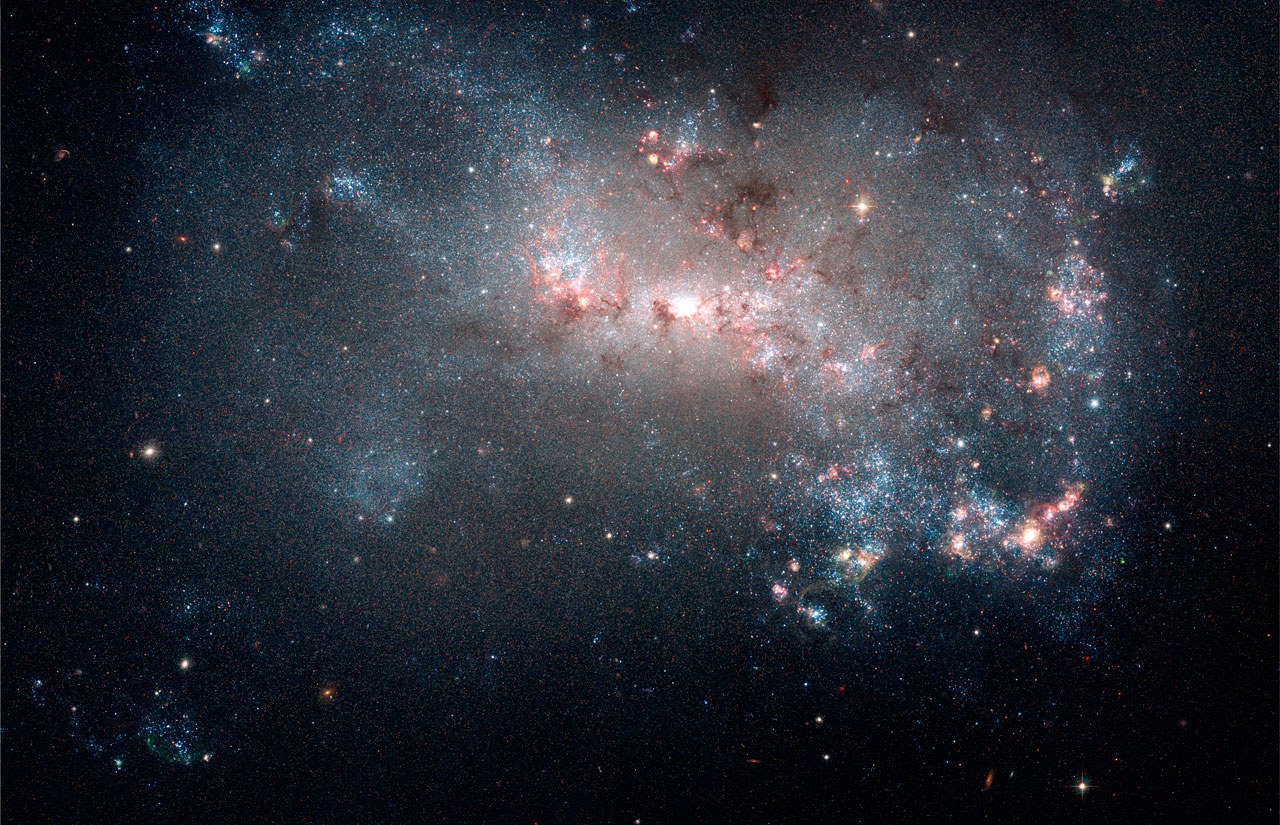
Think of a galaxy’s oxygen supply as a set of accounts. On one side is the amount made by its stars over time. On the other is the amount astronomers can still account for inside the galaxy. In a study reported by NASA on 2 November, the two sides were far apart. Across 37 nearby dwarf galaxies, the researchers estimated that an average of 11% of the oxygen produced had stayed inside.
That average hides a range. The team’s estimates ran from 4% to 25%, with nearly all the retained oxygen in gas. The figures refer to the share of the oxygen made by stars that the galaxies kept. They do not describe the percentage of oxygen in the atmosphere of any planet.
To build the first side of the account, the team used archived Hubble observations of individual stars. These galaxies are close enough for the telescope to distinguish stars from one another. Their populations carry clues to when stars formed. The scientists combined that history with other observations, including radio measurements of gas, to compare production with the oxygen present today.
One explanation involves the energy released by massive stars and by stars that explode. It can drive gas outwards. The observations suggest these flows remove material from small galaxies more efficiently than some simulations predict. Oxygen has been detected in gas surrounding dwarf galaxies, but the team cannot yet say whether most of the missing supply sits there or has travelled further into the space between galaxies.
The sample was deliberately narrow. The galaxies are rich in gas and span a range of masses where models predict that stellar explosions should be especially effective at pushing material away. Choosing nearby objects let the team check that prediction against the histories of individual systems.
What it means for you: when reading about this discovery, look at what the photograph shows and what required a calculation. The picture identifies a galaxy in the sample. The percentages come from comparing measurements and a reconstruction of the galaxies’ histories. The team can identify a shortfall without having mapped the final destination of every atom.