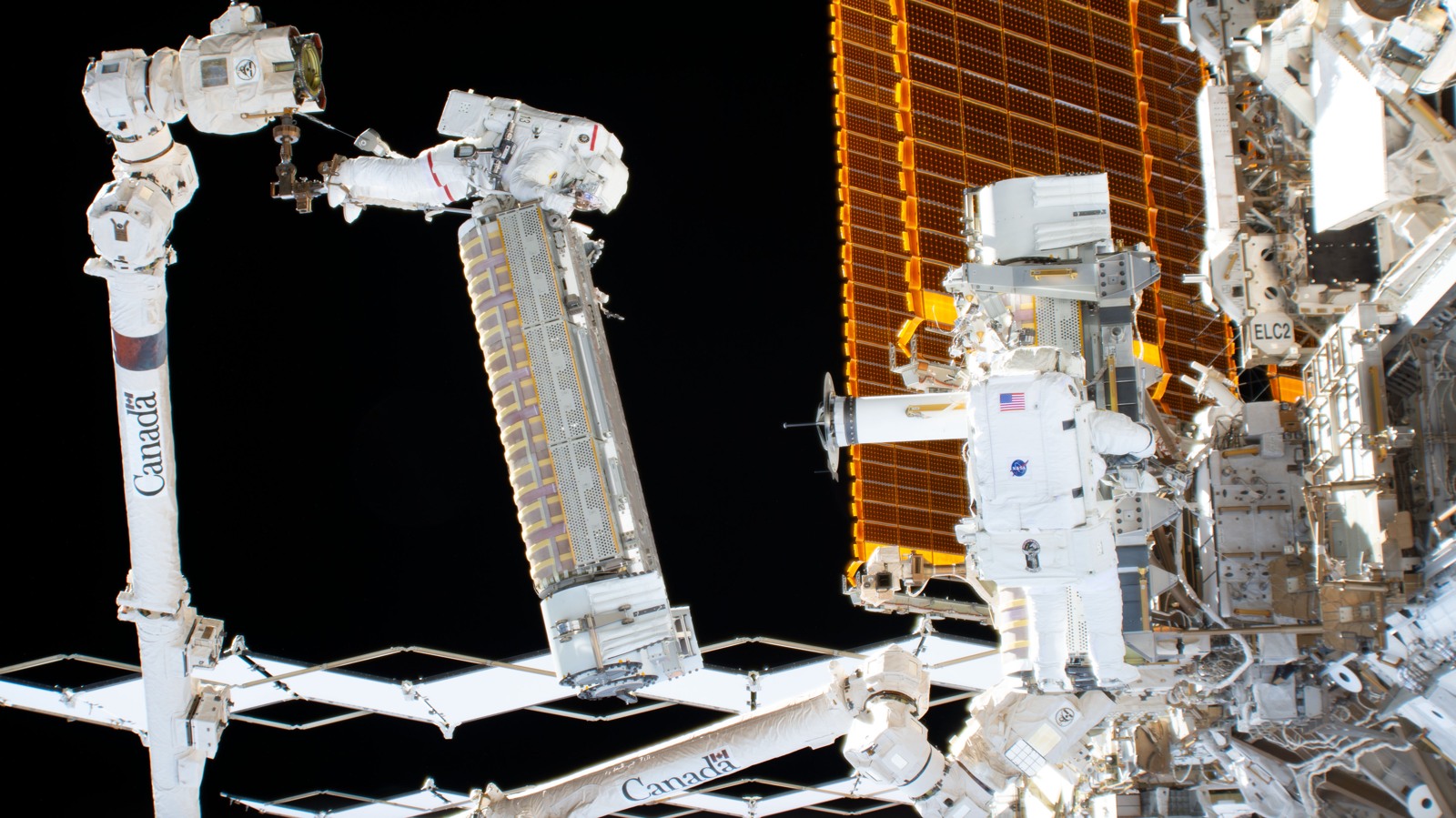
International Space Station dey increase power capability with solar arrays wey travel to orbit rolled into small cylinders. NASA October 15 update explain how the design move from technology demonstration to upgrade wey support science research and everyday work for the station.
After installation, the arrays open like mat wey person unroll. Their small shape for launch reduce space wey delivery need, while deployment system control how dem spread. This solve practical problem: panel need large surface to collect sunlight for orbit, but e must first fit inside delivery vehicle.
Station experiment test the technology in 2017. Dem install six newer arrays between 2021 and 2023 to support the original power system. NASA say another pair travel with SpaceX CRS-35 supply mission after power projections show need for another order. Delivery and final installation no be exactly the same stage.
The agency project say full eight-array upgrade go add more than 160 kilowatts for station work. That figure na for the combined upgrade, no be power from every individual panel. Old and new arrays belong to bigger system wey generate electricity and send am where equipment need am.
Electricity support life-support equipment, communication and scientific experiments. Better supply therefore affect wetin the laboratory fit operate, no be only how the station look. Installation also need careful work outside the station, as the historical spacewalk photograph show. The picture no document the latest arrival.
The bigger lesson na how small demonstration fit lead to working hardware. Successful rollout no remove need to manage ageing parts, stored power and demand. E give the station another way to maintain useful capacity while engineers gather experience with technology wey other spacecraft fit use.